
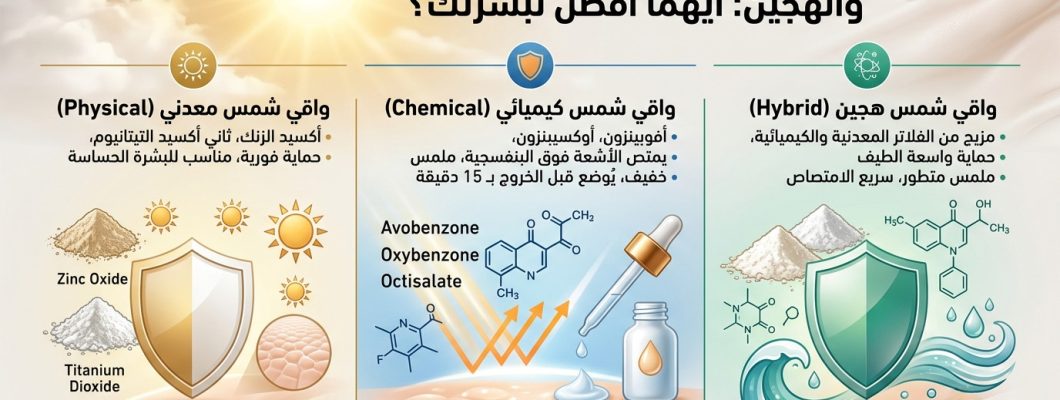
The Difference Between Mineral, Chemical, and Hybrid Sunscreens: Which One Is Best for Your Skin?
Choosing the right sunscreen is not only about the SPF protection level, but also depends on the type of filters used in its formula. With the wide variety of sunscreens available on the market, many people wonder: What is the difference between mineral, chemical, and hybrid sunscreens? And which one is suitable for my skin?
In reality, each type has its own advantages and uses, and there is no single sunscreen that works perfectly for everyone. Sensitive skin may benefit more from mineral sunscreen, while people with oily skin often prefer lightweight chemical formulas. Hybrid sunscreens combine the benefits of both types to provide balanced protection.
In this comprehensive guide, we will explain the differences between sunscreen types in a simple way, highlight the advantages and disadvantages of each one, and help you choose the best option according to your skin type, along with recommendations for the best products available at Beauty Ten Store and App.
What Is Sunscreen and Why Is It an Essential Step in Your Skincare Routine?
Sunscreen is the product responsible for protecting the skin from harmful ultraviolet rays (UVA and UVB) that can cause:
Sunburn.
Dark spots and pigmentation.
Melasma.
Premature skin aging.
Collagen breakdown.
Increased risk of skin cancer.
That is why dermatologists recommend using sunscreen daily, even on cloudy days or when sitting inside a car or near windows, because UVA rays can penetrate glass and reach the skin.
What Is the Difference Between UVA and UVB Rays?
Before learning about sunscreen types, it is important to understand the difference between the rays sunscreens protect against.
UVA Rays
Penetrate deeply into the skin.
Cause wrinkles and loss of elasticity.
Increase pigmentation and melasma.
Contribute to premature aging.
UVB Rays
Cause sunburn.
Affect the outer layers of the skin.
Are associated with an increased risk of skin cancer.
Therefore, it is important to choose a sunscreen that provides broad-spectrum protection against both types of rays.
What Is Chemical Sunscreen?
Chemical sunscreen relies on organic filters that absorb ultraviolet rays and convert them into a small amount of heat, which is then released through the skin. This gives chemical sunscreens their lightweight and invisible finish.
Advantages of Chemical Sunscreen
Lightweight texture and fast absorption.
Does not leave a white cast.
Works well under makeup.
Suitable for oily and combination skin.
Available in various forms such as gels, creams, and sprays.
Disadvantages
May cause irritation for some people with sensitive skin.
Usually needs to be applied 15–20 minutes before sun exposure.
Some formulas may contain fragrance or alcohol.
Suitable For
Combination skin.
Oily skin.
Daily use.
Sports and outdoor activities.
What Is Mineral Sunscreen?
Mineral sunscreen, also known as physical sunscreen, uses mineral ingredients such as Zinc Oxide and Titanium Dioxide to create a protective barrier on the skin that helps block ultraviolet rays.
Advantages of Mineral Sunscreen
Suitable for sensitive skin.
Gentle enough for children.
Generally considered a suitable option during pregnancy.
Provides protection immediately after application.
Less likely to cause irritation.
Disadvantages
May leave a white cast on the skin.
Usually has a thicker texture.
Requires good blending for an even appearance.
Suitable For
Sensitive skin.
Skin after laser treatments or chemical peels.
Children.
People who do not tolerate chemical filters.
What Is Hybrid Sunscreen?
Hybrid sunscreen combines both chemical and mineral filters in one formula, offering a balance between high protection and a lightweight texture.
It has become one of the most popular choices in recent years because it combines the benefits of both types while reducing some of their drawbacks.
Advantages
Provides broad-spectrum UVA and UVB protection.
Lighter texture compared to many mineral sunscreens.
Reduces the appearance of a white cast.
Suitable for most skin types.
Comfortable for daily use.
Comparison Between Chemical, Mineral, and Hybrid Sunscreens
| Feature | Chemical Sunscreen | Mineral Sunscreen | Hybrid Sunscreen |
|---|---|---|---|
| Texture | Very lightweight | Thicker texture | Medium texture |
| White cast | No | May appear | Rarely |
| Suitable for sensitive skin | Sometimes | Yes | Usually yes |
| Starts working | After 15–20 minutes | Immediately | Usually immediately or within minutes |
| Suitable under makeup | Excellent | Good | Excellent |
| Suitable for oily skin | Excellent | Good | Excellent |
| Suitable for children | Less common | Yes | Depends on the formula |
Which Sunscreen Type Is Best for Your Skin?
If You Have Oily or Combination Skin
The best options are:
A lightweight chemical sunscreen.
A hybrid sunscreen with a gel texture.
These formulas help reduce shine and avoid a greasy feeling.
If You Have Sensitive Skin
Mineral sunscreen is often the better choice because it contains gentler ingredients that are less likely to cause irritation.
If You Have Melasma or Pigmentation
Any type can be effective as long as it provides broad-spectrum protection. The most important factors are:
Reapplying sunscreen every two hours.
Using the correct amount.
Applying it consistently every day.
If You Exercise or Swim
Choose a water-resistant sunscreen to ensure long-lasting protection against sweat and water.
Is Chemical Sunscreen Harmful?
This is one of the most common questions online.
The short answer: No.
Chemical filters used in approved sunscreen products undergo strict safety testing and are considered safe when used correctly. However, if you have extremely sensitive skin or have recently undergone cosmetic procedures such as laser treatments or peeling, mineral sunscreen may be a more comfortable option.
Is Mineral Sunscreen Always Better?
Not necessarily.
Although it is an excellent choice for sensitive skin, some people may not prefer it because of the possible white cast or thicker texture. The best choice depends on your skin type and daily lifestyle.
Common Sunscreen Mistakes
Even the best sunscreen will not provide full protection if you make these mistakes:
Applying too little product.
Not reapplying sunscreen.
Applying chemical sunscreen immediately before going outside.
Forgetting areas such as the neck and ears.
Using a product that does not match your skin type.
Relying only on makeup products that contain SPF.
Best Sunscreens Available at Beauty Ten Store
If you are looking for reliable sunscreen products suitable for different skin types, Beauty Ten Store offers a wide range of sunscreens from popular international brands, including:
Bioderma with different formulas suitable for sensitive and combination skin.
La Roche-Posay with lightweight gel sunscreens suitable for oily skin.
Anua with soothing and hydrating formulas.
Eucerin with practical options for face and body.
ACM with lightweight and water-resistant formulas.
You can choose the product that best matches your skin type and daily skincare needs.
Get the Best Sunscreen Deals Through Beauty Ten App
To make your shopping experience easier, you can use the Beauty Ten App, which allows you to:
Browse hundreds of skincare products.
Compare products easily.
Read detailed product descriptions and benefits.
Enjoy exclusive in-app offers.
Discover the latest products from top international brands.
Don’t forget to use the discount code B10APP to get an additional discount when ordering through the app.
Conclusion
There is no single answer to whether mineral sunscreen is better than chemical or hybrid sunscreen. The best choice depends on your skin type and daily needs.
If your skin is sensitive, mineral sunscreen may be the most suitable option. If you prefer a lightweight texture and a non-greasy finish, chemical or hybrid sunscreen may be a better choice.
Always choose a sunscreen with SPF 50+ and broad-spectrum protection, and remember to reapply it regularly to maintain healthy skin, reduce pigmentation, and prevent signs of premature aging.
If you are looking for the best sunscreens from trusted brands, explore the available options at Beauty Ten Store and App and take advantage of exclusive offers using the discount code B10APP.
Leave a Comment