
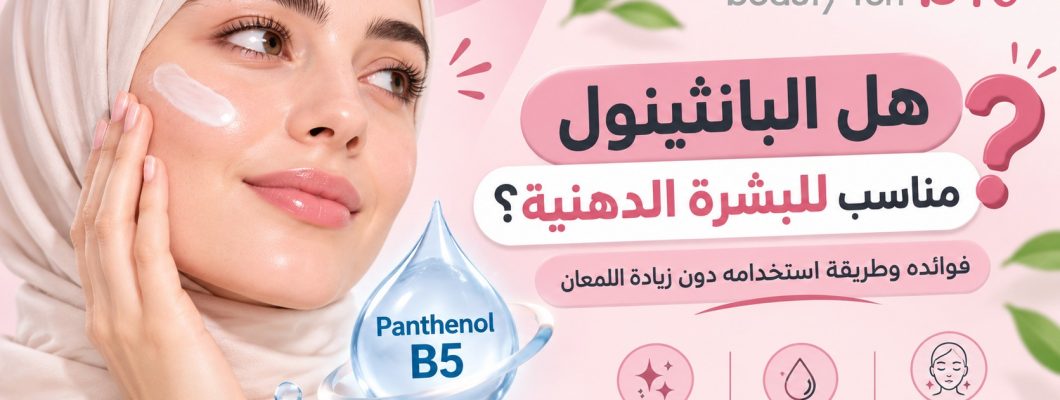
Is Panthenol Good for Oily Skin? Benefits and How to Use It Without Increasing Shine
People with oily skin are often looking for skincare ingredients that provide hydration and soothe the skin without making it feel greasy or increasing unwanted shine. One ingredient that frequently raises questions in skincare is Panthenol, also known as Pro-Vitamin B5, which is widely recognized for its moisturizing properties and its ability to support the skin barrier.
But is panthenol actually suitable for oily skin? Can it be used on acne-prone skin? And what type of product should you choose to get the benefits of hydration without a heavy or greasy feeling?
In this article, we will explore the benefits of panthenol for oily skin, how to choose the right formula, and the best way to incorporate it into your daily skincare routine.
Is Panthenol Good for Oily Skin?
Yes, panthenol can be suitable for oily skin because it helps moisturize the skin and support its natural barrier without necessarily increasing oil production.
It is important to understand the difference between skin hydration and oil production. Panthenol helps the skin retain moisture and improve its hydration levels, but it is not an ingredient specifically designed to control sebum production or treat acne.
The suitability of a product also depends on its overall formulation and texture. For oily skin, lightweight serums, gels, and lotions are often preferable to rich creams that may feel too heavy.
What Is Panthenol and How Does It Work on the Skin?
Panthenol is a derivative of Vitamin B5, also known as Pro-Vitamin B5. When applied topically, it is converted into pantothenic acid, the form associated with Vitamin B5.
Panthenol is commonly used in skincare products because of its moisturizing properties and its ability to support the skin barrier.
Research suggests that dexpanthenol, an active form used in many skincare formulations, helps improve hydration in the outermost layer of the skin and reduce transepidermal water loss, helping maintain skin softness and flexibility.
Benefits of Panthenol for Oily Skin
Although oily skin is characterized by increased sebum production, it still needs proper hydration and skin barrier care. This is where panthenol can play a useful role in a skincare routine.
1. Hydrates the Skin Without Requiring a Heavy, Oily Formula
Panthenol helps attract and retain moisture in the outer layer of the skin, improving hydration and helping reduce feelings of dryness.
To enjoy its benefits without a heavy feeling, choose products with lightweight textures, such as water-based serums, gels, or lotions.
2. Supports the Natural Skin Barrier
Oily skin can experience a weakened skin barrier due to excessive exfoliation, harsh cleansers, or acne-focused skincare products.
Panthenol helps support skin hydration and barrier function, making it a useful ingredient when the skin feels dry, tight, or uncomfortable after using certain skincare products.
3. Soothes the Skin and Helps Relieve Dryness
Skincare formulations containing panthenol may help improve the appearance of dry or irritated skin while supporting a more comfortable, hydrated feel.
This can be particularly helpful for oily skin that uses active ingredients such as exfoliating acids or retinoids, provided the products are chosen carefully and used appropriately.
4. Improves Skin Texture and Softness
When the skin receives adequate hydration, it can look smoother and feel more supple. Panthenol helps support this by improving moisture levels in the outer layer of the skin.
5. Suitable for Oily and Combination Skin Routines
Panthenol can be incorporated into oily or combination skin routines through serums, gels, or lightweight moisturizers, depending on the skin's needs and the product's formulation.
Does Panthenol Cause Breakouts on Oily Skin?
Panthenol is not generally known as an ingredient that causes acne on its own, but this does not guarantee that every product containing panthenol will be non-comedogenic.
The overall formulation is important. Some creams may contain other ingredients or have rich textures that are not comfortable for certain oily or acne-prone skin types.
When choosing a panthenol product, keep the following tips in mind:
Choose lightweight formulas that absorb easily.
Look for products labeled Non-Comedogenic if your skin is prone to clogged pores.
Avoid applying excessive amounts of rich creams.
Introduce the product gradually to monitor how your skin responds.
If you notice new breakouts or irritation after using a specific product, discontinue it and review its ingredients.
What Is the Best Panthenol Formula for Oily Skin?
Choosing the right product is not only about whether it contains panthenol. Its texture and other ingredients also matter.
Here are some common options to consider:
| Product Type | Suitability for Oily Skin |
|---|---|
| Panthenol Serum | A good option for those who prefer a lightweight, fast-absorbing texture |
| Panthenol Gel | Suitable for those looking for lightweight hydration and a less greasy feel |
| Panthenol Lotion | Can be suitable if it has a lightweight formulation |
| Rich Panthenol Cream | May feel too heavy for oily skin, especially in hot or humid weather |
Tip: If your skin is oily and acne-prone, start with a lightweight serum or gel and make sure the rest of the formula is suitable for your skin's needs.
How to Use Panthenol in an Oily Skin Routine
Panthenol is easy to incorporate into your daily skincare routine, provided you choose a formula that suits your skin.
Morning Routine
Wash your face with a gentle cleanser suitable for oily skin.
Apply a panthenol serum or gel according to the product instructions.
Use a lightweight moisturizer if your skin needs additional hydration.
Finish with a broad-spectrum sunscreen with SPF 30 or higher.
Evening Routine
Cleanse your skin to remove dirt, sunscreen, and makeup residue.
Apply your panthenol product to clean skin according to its instructions.
Follow with a lightweight moisturizer if needed.
Panthenol can be used in the morning or evening, depending on the product formulation and directions. There is no need to use several products containing panthenol in the same routine.
Can You Use Panthenol with Niacinamide or Salicylic Acid?
Panthenol can be combined with many skincare ingredients, but each ingredient has a different function.
Panthenol and Niacinamide:
These ingredients can be used together in an oily skin routine. Niacinamide helps improve the appearance of pores and uneven skin tone and can help regulate the appearance of excess oil, while panthenol supports hydration and the skin barrier.
Panthenol and Salicylic Acid:
They can be used in the same skincare routine if your skin tolerates both ingredients. Salicylic acid helps exfoliate inside the pores and address clogged pores, while panthenol helps support hydration and reduce feelings of dryness.
If you have sensitive skin or are new to exfoliating acids, introduce products gradually and monitor your skin's response.
Common Mistakes When Using Panthenol on Oily Skin
To get the most out of your product, avoid these common mistakes:
Choosing a rich cream simply because it contains panthenol: The presence of panthenol does not automatically mean that the product's texture is suitable for oily skin.
Applying too much product: Use the amount recommended by the manufacturer.
Assuming panthenol treats acne: Its main skincare benefits are related to hydration and skin barrier support, not direct acne treatment.
Skipping moisturizer because your skin is oily: Oily skin still needs hydration.
Combining too many active ingredients: Excessive exfoliation can cause irritation and dryness, even when soothing products are part of your routine.
Panthenol vs. Hyaluronic Acid for Oily Skin
Both ingredients help hydrate the skin, but they have different properties and functions.
| Comparison | Panthenol | Hyaluronic Acid |
|---|---|---|
| Main Function | Hydration and skin barrier support | Attracting water and helping maintain skin hydration |
| Skin Barrier Support | Helps improve skin barrier function | Supports hydration but does not replace other barrier-supporting ingredients |
| Suitable for Oily Skin | Yes, depending on the product formula | Yes, especially in lightweight serums |
| Common Product Types | Serums, gels, and creams | Serums, gels, and creams |
Both ingredients can be used together if your skin needs additional hydration. Choose suitable formulations and avoid using too many products unnecessarily.
Final Thoughts: Is Panthenol Worth Adding to an Oily Skin Routine?
Yes, panthenol can be a useful addition to an oily skin routine, especially if you are looking for an ingredient that helps moisturize the skin and support its natural barrier without relying on heavy creams.
However, remember that choosing the right product formulation is just as important as choosing the ingredient itself. Look for a lightweight panthenol serum or gel, monitor how your skin responds, and maintain a balanced skincare routine that includes cleansing, moisturizing, and sun protection.
Frequently Asked Questions About Panthenol for Oily Skin
Is panthenol suitable for oily skin?
Yes. Panthenol can be used on oily skin because it helps moisturize the skin and support the skin barrier. Lightweight formulas, such as serums and gels, are often good options.
Does panthenol increase oil production?
Panthenol is not used to control oil production, and its moisturizing role does not mean that it increases sebum production. Whether a product feels greasy depends largely on its formulation and texture.
Can panthenol be used on oily, acne-prone skin?
Yes, it can be used, provided you choose a lightweight product suitable for skin prone to clogged pores. However, panthenol is not a direct acne treatment.
Is panthenol suitable for sensitive, oily skin?
It may be suitable for supporting hydration and the skin barrier. However, it is best to test the product on a small area first, as any ingredient or formulation may cause irritation in some individuals.
Can I use panthenol every day?
Yes. Panthenol can be used daily if the product formulation is suitable for your skin and you follow the manufacturer's instructions.
Is panthenol better than hyaluronic acid for oily skin?
Neither ingredient is universally better. Both help hydrate the skin, but panthenol is particularly known for supporting the skin barrier, while hyaluronic acid is widely recognized for its ability to attract water.
Can I apply panthenol under makeup?
Yes. A lightweight panthenol serum or gel can be applied before makeup, provided it absorbs well and its formulation suits your skin.
Does panthenol help reduce the appearance of pores?
Panthenol does not directly shrink pores, but it helps improve skin hydration and texture. Other ingredients, such as niacinamide and salicylic acid, may be used to address the appearance of pores, depending on your skin's needs.
Discover More About Panthenol and Skincare at Beauty Ten
If you want to learn more about the benefits of panthenol and how to use it according to your skin type, explore the Panthenol Skincare Series on the Beauty Ten blog and discover products that complement your skincare routine.
Choose products that suit your skin type and its individual needs, and make hydration an essential part of your daily skincare routine.
Leave a Comment