
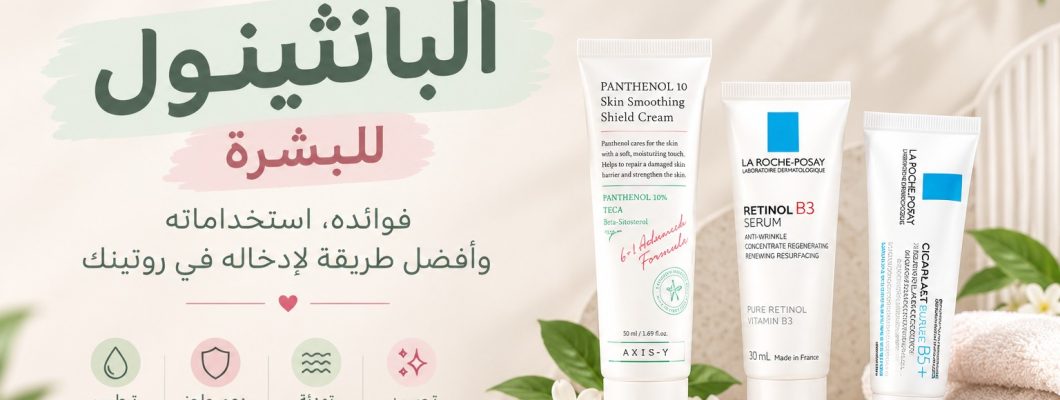
Panthenol for Skin: Benefits, Uses, and How to Incorporate It Into Your Skincare Routine
<>Are you experiencing dry skin or a tight feeling after washing your face? Has your skin become more sensitive after using retinol or exfoliating products? You may have come across <>panthenol<> in creams and serums designed to moisturize and soothe the skin.
<>Panthenol is a common ingredient in skincare products because it helps improve skin hydration and support the skin barrier. For this reason, it is frequently included in formulations designed for dry and sensitive skin, as well as products intended to relieve roughness and dryness.
<>But what are the actual benefits of panthenol for the skin? Is it suitable for oily and acne-prone skin? Can it be used with retinol? Most importantly, how can you choose the right product and incorporate it into your daily skincare routine?
<>In this guide, you will learn about the main uses of panthenol, how it compares with other moisturizing ingredients, and how to use it effectively as part of a balanced skincare routine.
<>What Is Panthenol?
<>Panthenol is a compound known as the alcohol form of vitamin B5 and is used in skincare and haircare products. Once absorbed, it can be converted into pantothenic acid in the skin, which is the form commonly known as vitamin B5.
<>Panthenol is added to many creams, lotions, serums, and ointments because of its moisturizing properties and its role in supporting the skin barrier.
<>It is important to distinguish between the presence of panthenol in a cosmetic product and the use of a medicinal treatment for a specific skin condition. The presence of this ingredient does not mean that a product can treat every case of inflammation, eczema, or wounds.
<>Scientific reviews suggest that topical products containing dexpanthenol, the active form used in many skincare products, may help improve skin hydration, support the skin barrier, and contribute to the recovery of minor superficial skin injuries.
<>Scientific reference: <>Topical Use of Dexpanthenol: A 70th Anniversary Article.
<>What Are the Benefits of Panthenol for Skin?
<>1. Moisturizing the Skin and Reducing Dryness
<>One of the main benefits of panthenol is its ability to help retain moisture in the outermost layer of the skin, supporting softness and improving skin texture.
<>This may be particularly beneficial if your skin experiences:
<>Dryness and tightness after cleansing.
<>Roughness or uneven texture.
<>Flaking associated with dryness.
<>A need for additional moisture in your daily skincare routine.
<>However, a product's moisturizing ability depends on its overall formulation and the other ingredients it contains. Its effects are not determined by panthenol alone.
<>2. Supporting the Skin Barrier
<>The skin barrier is the outermost layer of the skin that helps retain moisture, reduce water loss, and protect the skin from external factors.
<>When this barrier becomes weakened, you may notice dryness, roughness, or stinging when using certain skincare products.
<>Panthenol helps support hydration in the outer layer of the skin and its barrier function, particularly when used in a suitable moisturizing formulation.
<>However, if the skin barrier is severely damaged or an ongoing skin condition is present, a panthenol product alone may not be sufficient to address the underlying cause.
<>3. Helping Soothe Skin Discomfort
<>Products containing panthenol may help relieve some mild symptoms associated with dryness and irritation, such as tightness, roughness, and flaking.
<>This is why panthenol is commonly found in skincare products formulated for dry or sensitive skin.
<>However, it should not be considered a standalone treatment for every type of redness or inflammation. If redness is severe or accompanied by pain, swelling, or persistent itching, it is best to consult a dermatologist rather than simply changing your moisturizer.
<>4. Supporting the Recovery of Minor Superficial Skin Injuries
<>Some dexpanthenol products are used to support the recovery of minor superficial skin injuries. Research reviews also indicate evidence of potential benefits in certain cases of recovery following dermatological procedures.
<>However, the suitability of a product depends on the type of injury, its formulation, and its usage instructions. Do not apply an ordinary cosmetic product to an open wound or a significant burn without confirming that it is appropriate, and do not use it as a substitute for necessary medical care.
<>Is Panthenol Suitable for All Skin Types?
<>Panthenol can be suitable for different skin types, but <>the overall formulation matters more than the ingredient name alone<>.
<>Panthenol for Dry Skin
<>Panthenol may be a good option for improving hydration and reducing feelings of tightness and roughness.
<>If your skin needs additional moisture retention support, look for a cream containing other moisturizing and emollient ingredients, such as glycerin and ceramides.
<>Panthenol for Oily Skin
<>Having oily skin does not mean that your skin does not need hydration. Oily skin can also experience dryness, particularly after using strong cleansers or exfoliating products.
<>If you have oily skin, consider a lightweight lotion or gel-cream containing panthenol. Pay attention to the other ingredients and whether the product is suitable for your acne-prone skin.
<>The presence of panthenol does not automatically mean that a product is non-comedogenic. Its potential to clog pores depends on the complete formulation.
<>Panthenol for Sensitive Skin
<>Panthenol may help support hydration and reduce discomfort associated with dryness. However, sensitive skin may react to other ingredients in a product, such as fragrances or certain preservatives.
<>Choose a formulation


Leave a Comment