
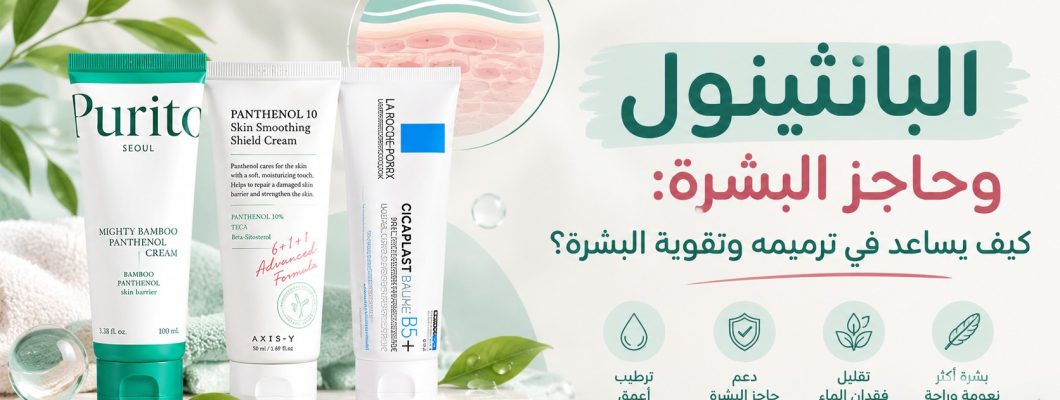
Panthenol and the Skin Barrier: How Does It Help Repair and Strengthen the Skin?
Does your skin feel drier or more sensitive than usual? Do you experience tightness after washing your face, notice flaking, or feel discomfort when using skincare products that you previously tolerated well? These signs may be related to a weakened skin barrier, which plays an essential role in maintaining skin health, retaining moisture, and protecting against external irritants.
Among the ingredients used to support the skin barrier is Panthenol, also known as Pro-Vitamin B5. This ingredient is commonly found in creams, serums, and cleansers. Studies on Dexpanthenol have demonstrated its role in improving hydration in the outermost layer of the skin and reducing transepidermal water loss.
But how does Panthenol work? Can it really help repair the skin barrier? And what is the difference between Panthenol, Ceramides, and Hyaluronic Acid?
In this guide from Beauty Ten, you will learn about the function of the skin barrier, the signs that may indicate it has become weakened, and how to choose suitable products to support it.
What Is the Skin Barrier, and Why Is It Important to Maintain It?
The skin barrier is the outermost part of the stratum corneum, which is the surface layer of the skin. It can be compared to a protective wall that helps retain moisture within the skin and limits the penetration of irritants and external factors.
This barrier consists of skin cells surrounded by intercellular lipids, including:
Ceramides: Help maintain the structure and integrity of the skin barrier.
Cholesterol: Plays a role in forming the protective lipid layers.
Fatty Acids: Contribute to supporting the lipid structure of the outer skin layer.
When these components are properly balanced and organized, the skin can retain moisture more effectively and is better equipped to cope with external factors.
However, when the skin barrier becomes compromised, transepidermal water loss (TEWL) may increase. This can lead to signs such as dryness, roughness, tightness, and increased sensitivity to skincare products.
What Are the Signs of a Weakened Skin Barrier?
There is no single sign that confirms a weakened skin barrier. However, experiencing several of the following symptoms together may indicate that your skincare routine needs to be reviewed.
Common signs include:
Persistent dryness: Your skin feels dry even after applying moisturizer.
Tightness after washing your face: This is particularly noticeable when using harsh cleansers or hot water.
Flaking and roughness: Certain areas may become less smooth and develop small flakes.
Increased sensitivity: You may experience stinging or discomfort when using products that previously suited your skin.
Irritation-related redness: Redness may appear after exfoliation or using unsuitable products.
Loss of comfort and flexibility: Your skin may feel tight or uncomfortable throughout the day.
These symptoms do not necessarily indicate a medical condition. They may also result from skin conditions such as eczema or contact dermatitis. If symptoms are severe or persistent, it is best to consult a dermatologist.
How Does Panthenol Help Support the Skin Barrier?
Panthenol is a precursor of Vitamin B5. Once absorbed, it is converted into pantothenic acid. Dexpanthenol is a form commonly used in many topical skincare preparations.
Its importance in skincare comes from its moisturizing properties and its potential role in supporting skin barrier function.
1. Improving Hydration in the Outer Skin Layer
Panthenol helps attract and retain moisture in the outer layer of the skin, contributing to reduced dryness and tightness.
A human study published in 2000 found that topical application of Dexpanthenol for seven days improved stratum corneum hydration and reduced transepidermal water loss compared with the vehicle alone.
This means that Panthenol does more than provide a temporary feeling of softness. Clinical evidence supports its effects on certain indicators of skin barrier function.
2. Helping Support Skin Barrier Recovery
When the skin barrier is exposed to frequent washing or irritating substances, it may need time and an appropriate skincare routine to recover its function.
In a study investigating skin irritation caused by sodium lauryl sulfate (SLS), using a cream containing Dexpanthenol was associated with faster barrier repair, improved hydration, and reduced roughness and redness compared with certain comparison groups.
However, it is important to understand that these findings do not mean every product containing Panthenol will produce the same results. Formulations, concentrations, and application methods vary between products.
3. Reducing Transepidermal Water Loss
One of the important indicators of skin barrier function is transepidermal water loss (TEWL).
When TEWL levels increase, this may indicate that the skin is losing moisture at a higher rate. A study involving a Panthenol-containing moisturizer observed improvements in water loss measurements and stratum corneum hydration following use.
Therefore, Panthenol can be a useful ingredient in moisturizing formulations designed to support the skin barrier, particularly when the skin is dry or affected by irritation.
4. Improving Skin Texture and Softness
Dryness and insufficient hydration can lead to roughness, flaking, and discomfort.
Using a suitable product containing Panthenol can improve hydration in the skin's surface layer, potentially making the skin feel smoother and more comfortable with regular use.
5. Supporting a Skincare Routine for Sensitive Skin
Sensitive skin may benefit from a simple routine focused on hydration and reducing exposure to potential irritants.
Panthenol can be incorporated into this routine through a suitable cream or serum. However, it is important to consider the entire formulation, as fragrances, certain preservatives, and other ingredients may not suit every type of sensitive skin.
Does Panthenol Rebuild the Skin Barrier?
It is more accurate to say that Panthenol helps support skin barrier function and recovery, rather than claiming that it independently rebuilds the barrier or treats every cause of barrier damage.
Skin barrier function is influenced by several factors, including the natural lipids in the stratum corneum, hydration levels, cleansing habits, environmental conditions, and underlying skin conditions.
For this reason, a more comprehensive skincare approach combines:
Hydrating ingredients such as Panthenol and Glycerin.
Ingredients that support natural skin lipids, such as Ceramides.
A gentle cleanser that does not cause noticeable dryness.
A suitable moisturizer that helps reduce moisture loss.
Broad-spectrum sunscreen during the day.
Panthenol vs. Ceramides vs. Hyaluronic Acid: Which Is Best for the Skin Barrier?
Each ingredient serves a different purpose, so none of them should be considered a complete replacement for the others.
| Ingredient | Main Function | When Is It Useful? |
|---|---|---|
| Panthenol | Supports hydration and skin barrier function | When experiencing dryness, tightness, or when a moisturizing routine is needed |
| Ceramides | Support the lipid structure of the skin barrier | When the skin is dry or the barrier needs additional lipid support |
| Hyaluronic Acid | Attracts water and helps maintain hydration | When additional skin hydration is needed |
| Glycerin | Attracts water to the outer skin layer | As part of a daily skincare routine for different skin types |
Can You Use Them Together?
Yes. A single skincare formulation may contain Panthenol, Ceramides, Hyaluronic Acid, or Glycerin. Combining these ingredients can be beneficial because each contributes differently to hydration and skin barrier care.
What Causes a Weakened Skin Barrier?
The skin barrier can be affected by daily habits and external factors. Some of the most common causes include:
1. Over-Exfoliation
Frequent use of chemical or physical exfoliants, especially when combining several strong products, may irritate the skin and increase dryness.
2. Using Harsh Cleansers
Some cleansers may cause tightness and dryness, particularly when they are unsuitable for your skin type or used too frequently.
3. Overusing Active Ingredients
Introducing Retinol and exfoliating acids at unsuitable concentrations or frequencies may increase the likelihood of dryness and irritation.
4. Environmental Factors
Dry air, cold weather, wind, and repeated sun exposure may contribute to increased moisture loss or a feeling of dryness.
5. Certain Skin Conditions
Eczema, contact dermatitis, and other skin conditions may be associated with impaired skin barrier function. In such cases, using a moisturizer alone may not be sufficient.
How to Use Panthenol in a Skin Barrier Support Routine
Panthenol can easily be incorporated into your morning or evening skincare routine, depending on the product type and its application instructions.
Morning Routine
Cleanse your face with a gentle cleanser suitable for your skin type.
Apply a serum containing Panthenol if you prefer to include this step.
Use a suitable moisturizer, which may contain Ceramides or other hydrating ingredients.
Apply a broad-spectrum sunscreen with SPF 30 or higher.
Evening Routine
Gently remove makeup and sunscreen.
Wash your face with a cleanser that does not leave your skin feeling tight.
Apply a Panthenol serum if it is part of your routine.
Use a moisturizer to help maintain skin hydration.
Note: If your skin is irritated or extremely dry, it may be better to simplify your routine and temporarily stop using exfoliants and Retinol until your skin condition improves.
Best Panthenol Products at Beauty Ten to Support the Skin Barrier
When choosing a product to support the skin barrier, it is important to consider its type, formulation, and texture rather than focusing on the presence of Panthenol alone.
1. Purito Seoul Mighty Bamboo Panthenol Cream
Purito Seoul Mighty Bamboo Panthenol Cream contains Panthenol and Bamboo Extract and is used as a moisturizing step in facial skincare.
It may be a suitable option for those looking for a daily cream that helps hydrate the skin and support its barrier, especially when experiencing dryness or tightness.
Why Consider This Product?
Contains Panthenol.
Includes Bamboo Extract.
Suitable as a moisturizing step in a skincare routine.
Can be used according to the product instructions and your skin's compatibility with the formula.
Discover Purito Seoul Mighty Bamboo Panthenol Cream at Beauty Ten
2. AXIS-Y Panthenol 10 Skin Smoothing Shield Cream
According to the product information, AXIS-Y Panthenol 10 Skin Smoothing Shield Cream contains 10% Panthenol, along with other ingredients such as TECA and Beta-Sitosterol, as stated on the packaging.
It may be considered by those looking for a cream focused on hydration and skin barrier care, while taking into account the appropriate amount and application method for their skin.
Key Features:
Contains 10% Panthenol.
<Includes additional ingredients that support skincare.
Can be incorporated as a moisturizing step in your routine.
Should be used according to the product instructions and your skin's tolerance.
Discover AXIS-Y Panthenol 10 Cream at Beauty Ten
3. Epii Double Up Cream with Ectoin and Panthenol
Epii Double Up Cream combines Ectoin and Panthenol, two ingredients used in skincare formulations designed to provide hydration and support the skin barrier.
It may suit those who prefer a moisturizing cream that combines more than one skin-supporting ingredient, while ensuring that the overall formulation meets their skin's needs.
Discover Epii Double Up Cream at Beauty Ten
Common Mistakes to Avoid When Trying to Repair the Skin Barrier
If your skin feels dry or sensitive, try to avoid the following habits:
Using more than one exfoliant in the same routine.
Combining several active ingredients without considering your skin's tolerance.
Washing your face with hot water or rubbing it too harshly.
Changing several skincare products at the same time.
Choosing products based only on their Panthenol percentage without reviewing the other ingredients.
Skipping sunscreen during the day.
Continuing to use a product that causes noticeable burning or irritation.
Frequently Asked Questions About Panthenol and the Skin Barrier
Does Panthenol Strengthen the Skin Barrier?
Panthenol helps support hydration in the outer layer of the skin and contributes to skin barrier function. Studies on Dexpanthenol indicate improvements in certain hydration measurements and reduced transepidermal water loss. However, results depend on the product formulation, skin condition, and method of use.
Is Panthenol Suitable for Damaged Skin?
It may be suitable as part of a moisturizing and skincare routine for skin experiencing dryness or mild irritation. However, if you have severe inflammation, painful cracks, or persistent symptoms, your skin should be evaluated by a dermatologist.
How Long Does It Take to Repair the Skin Barrier?
There is no single recovery period that applies to everyone. Improvement depends on the cause and severity of the damage, whether irritating factors are avoided, and how consistently an appropriate skincare routine is followed.
Some mild cases of dryness may improve within a relatively short period, while chronic conditions or problems associated with underlying skin disorders may require longer-term care and medical follow-up.
Can Panthenol Be Used Every Day?
Yes. Many Panthenol-containing skincare products can be used daily according to their instructions, provided your skin tolerates the formulation. Depending on the product type and your routine, it can be applied in the morning or evening.
Is Panthenol Better Than Ceramides?
Neither ingredient is universally better than the other. Panthenol supports hydration and skin barrier function, while Ceramides help maintain the lipid structure of the outer skin layer. Combining them may be beneficial in certain formulations.
Can Panthenol Be Used with Retinol?
A moisturizer containing Panthenol can be used as part of a Retinol routine and may help support hydration and reduce the feeling of dryness. However, if noticeable irritation occurs, you should review how you use Retinol and consider reducing or temporarily stopping active ingredients depending on your skin's condition.
Is Panthenol Suitable for Oily Skin?
Yes. Panthenol can also be suitable for oily skin, as product selection depends on its texture and formulation. Oily skin may prefer lightweight serums or creams that feel comfortable, while dry skin may benefit from richer moisturizing textures.
Does Panthenol Treat Eczema?
Panthenol-containing products should not be considered a standalone treatment for eczema. Some moisturizers containing Panthenol may be used as a supportive part of skincare, but eczema requires an appropriate treatment plan determined by a doctor according to the severity of the condition.
Conclusion: Is Panthenol Worth Adding to Your Skin Barrier Support Routine?
Panthenol is an important ingredient in many skincare products designed to provide hydration and support the skin barrier. Clinical evidence on Dexpanthenol suggests that it may improve hydration in the outer layer of the skin, reduce water loss, and support barrier recovery under certain irritation-related conditions.
However, achieving a balanced skincare routine does not depend on Panthenol alone. It also requires gentle cleansing, a suitable moisturizer, supportive ingredients such as Ceramides when needed, and avoiding excessive exfoliation and irritating products.
If you are looking for products to help build a skincare routine focused on hydration and skin barrier support, explore the Panthenol options available at Beauty Ten and choose the formulation that best suits your skin's needs.
Scientific References
Gehring W, Gloor M. (2000). Effect of topically applied dexpanthenol on epidermal barrier function and stratum corneum hydration.
Proksch E, Nissen HP. (2002). Dexpanthenol enhances skin barrier repair and reduces inflammation after sodium lauryl sulphate-induced irritation.
Dähnhardt-Pfeiffer S, et al. (2016). A new topical panthenol-containing emollient: Results from two randomized controlled studies.
Ebner F, et al. (2002). Topical use of dexpanthenol in skin disorders.
Leave a Comment