
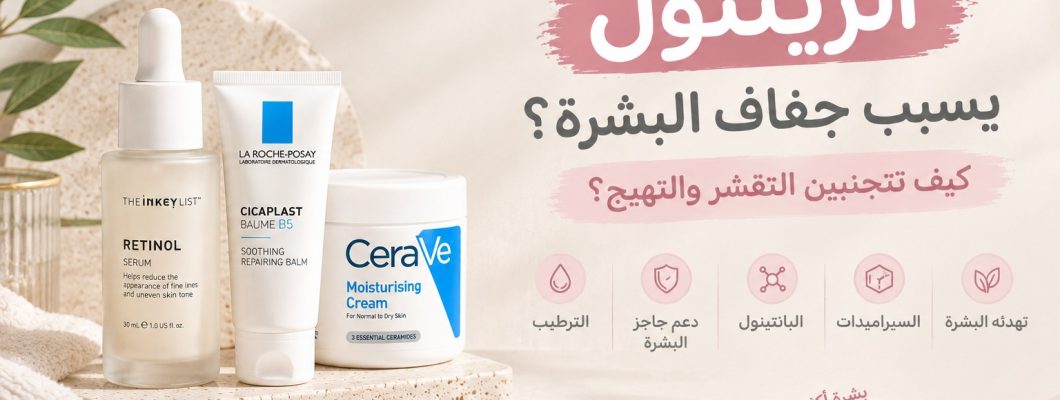
Does Retinol Cause Dry Skin? How to Prevent Peeling and Irritation
Have you started using retinol and noticed that your skin has become drier, small flakes have appeared around your nose and mouth, or your face feels tight and looks red after cleansing? These are common issues that may occur when introducing retinol into your skincare routine, especially if you use it too frequently or combine it with other exfoliating products.
But does this mean you have to stop using retinol permanently? Not necessarily. The right approach depends on the severity of your symptoms, the condition of your skin barrier, and how well your skin tolerates the product.
In this guide from <>Beauty-10<>, you will learn why retinol causes dry skin, how to reduce peeling and irritation, and how panthenol, ceramides, moisturizers, and skin barrier repair creams can help make your skincare routine more comfortable.
Does Retinol Cause Dry Skin and Peeling?
Yes, retinol can cause dryness, peeling, redness, and a stinging sensation, particularly when you first start using it or increase the frequency of application too quickly.
Retinol is a derivative of vitamin A used to help improve the appearance of fine lines, uneven skin tone, and skin texture. Certain retinoids are also used to treat acne.
However, the benefits of these ingredients do not mean your skin must peel for you to see results. Peeling is not a sign that a product is working, and severe irritation may make your skin more sensitive and potentially worsen hyperpigmentation in some individuals.
According to the American Academy of Dermatology, irritation from retinoids may be reduced for some users by adjusting the amount applied or the frequency of use and incorporating an appropriate moisturizer, while following a healthcare professional's instructions when using prescription treatments. <>Read the medical guidance<>.
Why Does Retinol Cause Dryness and Irritation?
There are several possible reasons why your skin may become dry or irritated when using retinol. Understanding the cause can help you choose the right solution instead of adding more products to your routine.
1. Using Retinol Too Frequently at the Beginning
Applying retinol every day from the first week may increase the risk of irritation, especially if you have sensitive skin or are not accustomed to vitamin A derivatives.
Solution:<> Start with a suitable formulation and a low frequency of application, following the product instructions. Gradually increase how often you use it only if your skin tolerates it well. You do not need to increase usage quickly to achieve results.
2. Using a Concentration Your Skin Cannot Tolerate
A stronger formulation is not necessarily better for everyone. Your skin may tolerate a low concentration comfortably, while a higher concentration may cause dryness and redness that make it difficult to maintain your routine.
Solution:<> Choose a formulation that suits your previous experience with retinol. Do not switch to a higher concentration simply because you have not noticed results within a few days.
3. Combining Retinol With Strong Exfoliants
Using retinol alongside exfoliating acids, such as salicylic acid or glycolic acid, or physical exfoliants may increase irritation in some people, particularly when starting a new routine.
Solution:<> Keep your routine simple at first, and avoid combining multiple potentially irritating ingredients in the same session until you know how well your skin tolerates retinol.
4. Neglecting Moisturization and the Skin Barrier
Using drying skincare products and harsh cleansers alongside retinol may increase tightness, roughness, and peeling.
Solution:<> Use a gentle cleanser and a moisturizer suited to your skin type, focusing on hydrating ingredients that help support the skin barrier.
5. Continuing to Use Retinol Despite Clear Signs of Irritation
Persistent redness, burning, and cracking are symptoms you should not ignore or tolerate in pursuit of faster results.
Solution:<> Temporarily stop using retinol if you develop noticeable irritation and focus on gentle skincare and moisturization. If your symptoms are severe or persistent, consult a dermatologist before restarting it.
How to Prevent Dry Skin When Using Retinol
If your dryness is mild and you do not have signs of severe irritation, the following steps may help improve your skin's tolerance of retinol.
First: Choose a Moisturizer That Supports the Skin Barrier
A moisturizer is not an optional extra when using retinol. It can be one of the most important steps in helping your skin retain moisture and reducing dryness.
Look for moisturizers containing ingredients such as:
Ceramides:<> Lipids that help support the skin's natural barrier and reduce moisture loss.
Glycerin:<> A humectant that attracts water and helps retain moisture in the outer layer of the skin.
Hyaluronic acid:<> Helps hydrate the skin and improve its texture.
Panthenol:<> A moisturizing and soothing ingredient that may improve skin comfort and support the skin barrier.
Squalane:<> An emollient that helps reduce moisture loss and improve skin softness.
Your moisturizer does not need to contain all these ingredients. The most important thing is to choose a gentle formulation that suits your skin type and does not cause clogged pores or irritation.
The American Academy of Dermatology recommends considering moisturizers containing ingredients such as ceramides and hyaluronic acid when additional hydration is needed, while taking your skin type and degree of dryness into account. <>Learn how to choose a moisturizer<>.
Second: Add Panthenol to Your Skincare Routine
Panthenol, also known as provitamin B5, is an ingredient that may be helpful when your skin needs hydration and soothing care.
Panthenol may help:
Improve skin hydration and reduce tightness.
Support the skin barrier when used in an appropriate formulation.
Improve the texture of dry, rough skin.
Make your skincare routine more comfortable when your skin is experiencing dryness.
However, panthenol does not eliminate all potential side effects of retinol, nor does it automatically make a high concentration or excessive frequency of use safe.
How do you choose a panthenol product?
You can choose a soothing serum or a moisturizer containing panthenol, depending on your skin's needs. If your skin is very dry, a richer cream may be more suitable than a serum because it can help retain moisture.
If you have oily, acne-prone skin, consider a lightweight formulation that does not clog pores instead of applying a heavy cream all over your face.
Third: Use a Skin Barrier Support Cream When Needed
If dryness or peeling becomes noticeable, your skin may benefit from a richer cream than your usual moisturizer, particularly in areas prone to dryness, such as the sides of the nose and the cheeks.
Look for a cream containing an appropriate combination of moisturizing ingredients, ceramides, and soothing components. Avoid fragranced products and formulas containing additional exfoliating ingredients if your skin is irritated.
Remember that skin barrier creams vary in formulation. Some are better suited to very dry skin, while lighter options are available for combination and oily skin.
Products From Beauty-10 You Can Link to This Article
When preparing this article for publication, consider adding product cards for items that are actually available at Beauty-10 and linking each product to the relevant section.
1. CeraVe Moisturising Cream
A rich moisturizer that can be featured in the section about supporting the skin barrier, particularly for normal to dry skin. Its formula contains ceramides and moisturizing ingredients that help retain moisture.
2. Avène Cicalfate+ Restorative Protective Cream
This product can be featured in the section on caring for dry or compromised skin, with a clear explanation that it is intended to support skin care and is not a treatment for every type of retinol-related irritation.
3. SKIN1004 Madagascar Centella Ampoule
This product can be linked in the section about soothing serums, provided it is currently available in the store. It is an option readers can explore as part of a gentle skincare routine, although a serum does not necessarily replace a moisturizer.
4. Anua Heartleaf 77 Soothing Toner
This product can be linked in the section about gentle skincare, provided it is available at Beauty-10. However, if the skin is noticeably dry or irritated, there is no need to introduce a new toner. A gentle cleanser and moisturizer may be sufficient temporarily.
Editorial note:<> Verify product availability and exact product names in the store before adding product cards. Do not include a product simply because it contains a popular ingredient. Choose products that genuinely support the article's purpose.
How to Apply Moisturizer Correctly When Using Retinol
You can follow a simple routine that helps reduce dryness without making your skincare steps unnecessarily complicated.
Evening Routine
Step 1: Cleanse Your Skin
Use a gentle cleanser that does not leave your skin feeling tight or dry. Avoid hot water and vigorous rubbing.
Step 2: Apply Moisturizer if Needed
If your skin is sensitive or prone to dryness, you can apply a layer of moisturizer before retinol, then follow the product's instructions for application. This approach may help improve tolerability for some people.
Step 3: Apply Retinol
If your skin tolerates retinol and is not irritated, use the amount specified in the product instructions on dry skin. Avoid sensitive areas, such as the corners of your nose, lips, and the skin around your eyes, unless the formulation is specifically designed for those areas.
Step 4: Apply Moisturizer Again
You can apply moisturizer after retinol to help reduce dryness. You do not need to layer several serums and creams at the same time. Choose only what your skin actually needs.
If your skin is peeling or skincare products cause a burning sensation, do not try to solve the problem by layering more products on top. Temporarily stop using retinol and focus on a gentle routine until your skin settles.
Morning Routine
Wash your face gently or use a cleansing approach appropriate for your skin.
Apply a moisturizer suited to your skin's needs.
Apply a broad-spectrum sunscreen with SPF 30 or higher, and reapply according to its instructions.
Sun protection is particularly important when addressing hyperpigmentation because exposure to ultraviolet radiation can worsen dark spots.
Does Oily Skin Need Moisturizer When Using Retinol?
Yes. Oily skin may also need moisturizer, particularly if it feels tight or begins to peel after using retinol.
However, you do not necessarily need a heavy cream. You can start with a lightweight moisturizer or hydrating gel suitable for oily skin. If you are prone to breakouts, consider a product labeled non-comedogenic.
If noticeable flaking or severe dryness develops, you may need a more nourishing formulation for dry areas, even if your skin is naturally oily.
Do not rely on oil production alone to determine whether your skin needs hydration. Also pay attention to tightness, roughness, and redness.
Should You Stop Using Retinol if Your Skin Starts Peeling?
It depends on the severity of your symptoms.
Mild dryness without noticeable redness or burning:<> Reducing application frequency and improving moisturization may help if your skin continues to tolerate the product.
Noticeable peeling accompanied by redness or stinging:<> Temporarily stop using retinol and focus on a gentle cleanser and moisturizer.
Severe burning, swelling, cracks, or pain:<> Stop using irritating products and seek medical assessment, particularly if your symptoms do not improve.
If irritation returns every time you try to restart retinol, you may need to change the formulation, adjust your application method, or consider an alternative with guidance from a dermatologist.
Retinoids should be avoided during pregnancy. If you are using a prescription retinoid, do not change the dosage or application instructions without consulting the prescribing healthcare professional.
Mistakes That Make Retinol-Related Dryness Worse
Even with a good moisturizer, dryness may persist if other steps in your routine continue to irritate your skin.
Avoid these common mistakes:
Using retinol every day from the beginning without considering your skin's tolerance.
Applying more than the recommended amount.
Combining several exfoliants or strong active ingredients in one routine.
Scrubbing flakes or trying to remove them with exfoliating products.
Using a harsh cleanser or hot water.
Neglecting moisturizer and sunscreen.
Continuing to use retinol despite burning or cracking.
A successful skincare routine is not the most complicated one. It is the one that helps you achieve your skincare goals while maintaining your skin's comfort and natural barrier.
Frequently Asked Questions About Retinol and Dry Skin
Does Peeling Mean Retinol Is Working?
No. Peeling is not a requirement for retinol to provide benefits and may indicate skin irritation. Do not increase the concentration or frequency of application to encourage more peeling.
Does Panthenol Prevent Dryness When Using Retinol?
Panthenol may help hydrate the skin and improve comfort, but it cannot guarantee that dryness will be prevented entirely. Results depend on the formulation, application method, and condition of your skin barrier.
Can You Use Ceramides and Retinol Together?
Yes. You can use a moisturizer containing ceramides as part of your retinol routine. Ceramides help support the skin barrier and retain moisture, making them potentially beneficial when your skin experiences dryness.
Should You Apply Retinol to Peeling Skin?
If peeling is accompanied by redness, burning, or noticeable irritation, it is best to temporarily stop using retinol and focus on gentle skincare. Do not apply it to cracked or inflamed skin.
What Is the Best Moisturizer to Use With Retinol?
There is no single moisturizer that works best for everyone. A rich cream may suit dry skin, while a hydrating gel may be more appropriate for oily skin. Look for ingredients such as ceramides, glycerin, and panthenol, and choose a formulation your skin tolerates well.
Read More: Retinol Guides From Beauty-10
If you want to build a complete skincare routine and better understand the role of retinol in skin care, explore these related articles:
Retinol for Skin: Benefits, How to Use It, and the Best Way to Start<> — A foundational guide to understanding retinol and introducing it into your skincare routine.
Retinol for Beginners: How to Start Using It Without Irritation<> — Practical steps for starting gradually and reducing the risk of irritation.
Retinol for Sensitive Skin: Is It Suitable, and How Can You Use It?<> — Guidance on choosing an appropriate routine for sensitive skin.
Retinol for Oily Skin: Can It Help With Pores and Acne?<> — Understanding how retinol may be used for oily, acne-prone skin.
Retinol for Acne: Can It Help Treat Acne-Prone Skin?<> — Exploring retinol's role and how it differs from other acne treatment ingredients.
Retinol for Hyperpigmentation and Acne Marks: Can It Help Even Out Skin Tone?<> — Understanding its potential role in improving the appearance of dark spots and post-acne marks.
You can add links to these articles after verifying their published URLs on the Beauty-10 blog.
Conclusion
Retinol may cause dry skin, peeling, and irritation, but managing these symptoms starts with understanding their cause, reducing usage when necessary, and choosing a moisturizer that supports the skin barrier.
Panthenol, ceramides, and glycerin can be helpful ingredients during this stage, but no ingredient can compensate for excessive retinol use or ignoring signs of irritation.
Start with a simple routine, give your skin enough time to adjust, and do not make peeling your goal. Effective skincare begins with comfortable skin and a healthy skin barrier.
Leave a Comment