
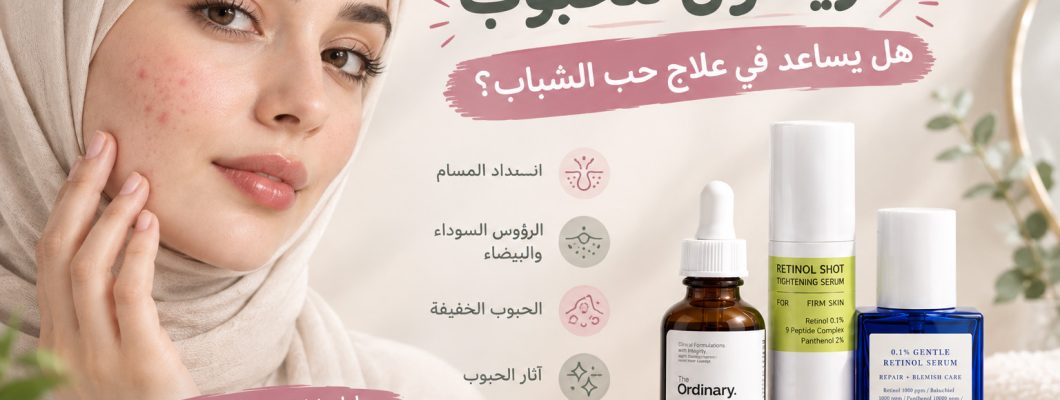
Retinol for Acne: Does It Help Acne-Prone Skin?
If you struggle with acne, blackheads, or clogged pores, you have probably come across retinol as a skincare ingredient recommended for improving skin texture and appearance. But does it actually help with acne? And can it be used instead of products specifically designed to treat breakouts?
Retinol is a vitamin A derivative that belongs to the retinoid family. Some topical retinoids are used in acne treatment plans because they help prevent clogged pores. However, it is important to distinguish between retinol found in cosmetic skincare products and prescription retinoids recommended by doctors to treat acne.
In this guide, we’ll explore the role of retinol in skincare for acne-prone skin, how it differs from other acne-fighting ingredients, and how to choose a suitable product from Beauty Ten without overwhelming your skin.
First: How Can Retinol Help Acne-Prone Skin?
Some types of acne begin when dead skin cells and oil accumulate inside pores. This can lead to blackheads and whiteheads, followed by certain types of pimples.
Topical retinoids help regulate skin cell turnover and make pores less prone to clogging. For this reason, they can be part of an acne treatment plan, depending on the type of retinoid and the condition of your skin.
Cosmetic retinol products, on the other hand, may be an option in a skincare routine to improve the appearance of skin texture and uneven tone. However, not every retinol serum should be considered a medical acne treatment or an automatic substitute for products specifically designed to treat acne.
Second: Retinol and Clogged Pores
If your skin feels rough or looks uneven, or you frequently notice small bumps, clogged pores may be one of the contributing factors.
Topical retinoids used to treat acne help reduce the formation of clogged pores. This makes them particularly useful for non-inflammatory acne, such as blackheads and whiteheads.
However, you should not expect every cosmetic retinol product to address clogged pores to the same extent. Results depend on the product’s formula, concentration, and how it is used. Acne can also have different causes from person to person.
Third: Does Retinol Help With Blackheads and Whiteheads?
Blackheads and whiteheads are forms of non-inflammatory acne associated with clogged pores.
Blackheads: These appear when the pore opening remains open and the material inside oxidizes, giving it a dark appearance.
Whiteheads: These form when the pore opening is closed, appearing as small, skin-colored or white bumps.
Topical retinoids are used in treatment plans for this type of acne because they help reduce clogged pores. If your main concern is blackheads and whiteheads, it may be helpful to discuss suitable treatment options with a dermatologist, especially if the problem is persistent or widespread.
If you are choosing a cosmetic retinol product, start cautiously and avoid combining it with several strong exfoliants from the beginning, as irritation can make your skincare experience more difficult.
Fourth: Retinol for Mild Acne
Mild acne may appear as occasional pimples, blackheads, and whiteheads. These breakouts may recur in areas such as the forehead, chin, and cheeks.
In this situation, it is important to identify the type of bumps first. Not every small bump is acne, and some other skin conditions can look similar but require different care.
If you have mild acne, cosmetic retinol may be part of a routine designed to improve your skin’s appearance. However, it is not the only treatment option, nor is it the most suitable choice for every case.
There are ingredients specifically used for acne, such as salicylic acid and benzoyl peroxide, and each has different uses and precautions.
If your acne is painful, leaves scars, or continues to worsen despite skincare, it is best to consult a dermatologist rather than relying on cosmetic products alone.
Fifth: Retinol for Post-Acne Marks and Hyperpigmentation
After acne clears, dark spots or discoloration may remain, making your skin tone look uneven. At this stage, the goal is different from treating active acne: the focus shifts to improving the appearance of hyperpigmentation while continuing to prevent new breakouts if acne is still an ongoing concern.
The American Academy of Dermatology explains that some retinoids used to treat acne may also help lighten dark spots that appear after breakouts. However, this does not mean every cosmetic retinol serum will produce the same results.
This can be considered among skincare options targeting the appearance of post-acne marks and uneven skin tone. Choose it according to the product instructions and your skin’s tolerance, and do not rely on it alone if you still have active acne.
Another cosmetic retinol option. Pay attention to the concentration listed on the packaging and remember that its squalane-based formula may not have the texture preferred by every person with oily or acne-prone skin.
If post-acne marks are your main concern, other ingredients, such as azelaic acid, may also suit your needs, alongside daily sun protection.
If the marks are actually indented scars or pits, at-home serums will not treat them in the same way they can address discoloration. These types of scars may require medical evaluation.
Sixth: What Is the Difference Between Retinol and Acne-Treatment Ingredients?
Not every product labeled “Retinol” is designed to treat acne. It is therefore useful to understand the differences between some of the most common ingredients.
| Ingredient | Main Role |
|---|---|
| Prescription retinoids, such as adapalene and tretinoin | Help unclog pores and reduce acne formation. They are used in acne treatment plans. |
| Cosmetic retinol | Commonly used to improve the appearance of skin texture and uneven tone and may be part of a skincare routine. |
| Salicylic acid | Helps exfoliate the skin and clear clogged pores. It is particularly used for blackheads and whiteheads. |
| Benzoyl peroxide | Reduces acne-associated bacteria and is used in treatments for inflammatory acne. |
| Azelaic acid | Helps treat certain types of acne and may also improve the appearance of dark spots left after breakouts. |
Acne treatment guidelines recommend topical prescription retinoids, benzoyl peroxide, and other options depending on the condition. A doctor may combine treatments that work in different ways when needed.
The takeaway: If your main goal is to treat acne, do not choose a product based on the word “retinol” alone. Check the active ingredient, the product’s intended purpose, and whether it is an acne treatment or a cosmetic product designed to improve the skin’s appearance.
Seventh: Beauty Ten Retinol Products and How to Choose Between Them
If you are looking for a retinol serum to add to your routine, here are some options from the product links provided. These are cosmetic skincare options and should not be presented as equivalent alternatives to acne medications.
This may be considered a cosmetic option if you want to add a retinol product to your skincare routine. Check the retinol concentration and usage instructions on the packaging, and do not rely on it alone to treat active acne.Its name indicates a 0.1% concentration, making it one of the products you may compare when looking for a relatively low retinol percentage. However, concentration alone does not guarantee that a product will be irritation-free or suitable for acne-prone skin.
It may be worth considering when post-acne marks and uneven skin tone are among your skincare goals. Keep in mind that treating discoloration is different from treating active breakouts.
You do not need to use more than one retinol serum in the same routine. Choose just one product if it suits your needs, and introduce it gradually according to its instructions.
Eighth: How to Use Retinol if You Have Acne-Prone Skin
If you decide to add a cosmetic retinol serum to your skincare routine, follow these simple steps:
Start using it in the evening at a low frequency, such as once a week, and monitor your skin’s response.
Apply it to clean, dry skin using the amount specified in the product instructions.
Use a suitable moisturizer to reduce dryness and support your skin barrier.
Apply broad-spectrum sunscreen with SPF 30 or higher in the morning.
Avoid introducing several new active ingredients at the same time so you can monitor how your skin responds.
You may need to adjust the frequency or stop using the product if noticeable irritation develops. Do not try to speed up results by applying more product or using it more often. This may increase dryness and redness without guaranteeing an improvement in acne.
Important: Retinoids should be avoided during pregnancy. If you are using a medical acne treatment or have deep or painful breakouts, consult a dermatologist before adding cosmetic retinol.
Ninth: Can You Get More Breakouts When You First Start Using Retinol?
Some people may notice temporary changes in their skin when introducing a new active ingredient. However, you should not assume that every increase in breakouts is “skin purging” or a sign that the product is working.
If new breakouts appear alongside itching, burning, or noticeable redness, this may indicate irritation or an unfavorable reaction to the product. Temporarily stop using it and monitor your skin. Seek medical advice if the symptoms are severe or persistent.
If your acne continues to worsen, becomes painful, or leaves scars, do not wait too long in the hope that your skin will simply adjust. Early diagnosis and treatment may help reduce the lasting effects of acne.
Tenth: When Should You See a Dermatologist?
Consult a dermatologist if you have:
Deep, painful, or recurring acne.
Scarring or pitted marks after breakouts.
Acne that spreads or worsens despite following a suitable routine.
Severe or persistent irritation after using retinol.
Concerns that your bumps may not actually be acne.
Treatment plans vary according to the type and severity of acne. Some cases may require topical or oral medication rather than a cosmetic serum alone.
Frequently Asked Questions About Retinol and Acne
Does Retinol Treat Acne?
Cosmetic retinol is not equivalent to prescription retinoids specifically used to treat acne.
Topical retinoids such as adapalene and tretinoin are medically used to help unclog pores and reduce breakouts. A doctor can determine which option is appropriate for your condition.
Is Retinol Suitable for Blackheads?
Topical retinoids used to treat acne help unclog pores, which is why they are among the treatment options for blackheads and whiteheads.
Cosmetic retinol products may be used as part of a routine to improve skin texture, but you should not assume they will have the same effect as prescription acne treatments.
Can I Use Retinol With Salicylic Acid?
Some ingredients may be included in the same treatment plan for certain people, but starting retinol and salicylic acid together may increase the risk of irritation.
If you are a beginner, introduce one product at a time. Consult a professional if you are already using acne medication.
Should I Apply Retinol Directly to Pimples?
Do not apply extra product to an individual pimple in an attempt to make it disappear faster.
Follow the product instructions. Products designed for use over an entire acne-prone area differ from other spot treatments, and prescription medications have specific directions.
Is Retinol Suitable for Oily Skin?
Some people with oily skin can use retinol products, but oiliness alone does not determine whether a product is suitable.
The type of acne, the condition of your skin barrier, your tolerance of the formula, and your skincare goals are all important factors.
Conclusion
Retinol can be part of a skincare routine for acne-prone skin, but it is important to distinguish cosmetic retinol products from prescription retinoids used to treat acne.
If your main concern is blackheads, whiteheads, or persistent breakouts, a treatment specifically designed for acne may be more suitable than relying on a cosmetic serum alone.
If your goal is to improve the appearance of skin texture and post-acne marks, you can compare available retinol products and choose one that suits your skin, while introducing it gradually and maintaining moisturization and sun protection.
To learn more about this ingredient, explore the related articles in our retinol cluster:
Leave a Comment