
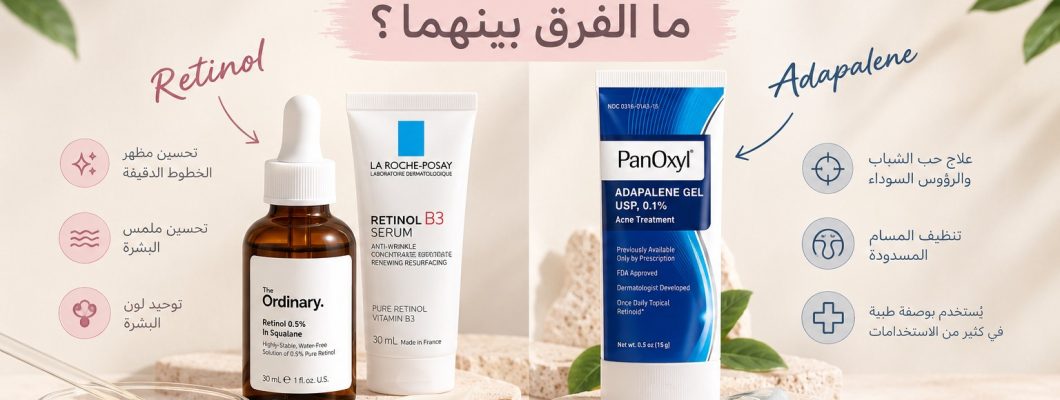
Retinol vs. Adapalene: What’s the Difference, and Which Is Better for Acne?
If you’re looking for a product to help improve your skin’s appearance, you’ve probably come across two popular ingredients: <>retinol and adapalene. Both belong to the vitamin A-related family of compounds known as retinoids, but they differ in their uses and how you should choose between them.
Retinol is commonly used in cosmetic skincare products designed to improve the appearance of fine lines, skin texture, and uneven skin tone. Adapalene, on the other hand, is a topical retinoid used to treat acne, including blackheads, whiteheads, and certain types of pimples.
So, is adapalene better than retinol for oily skin? Can you use them together? And when should you choose a retinol serum versus a dedicated acne treatment?
In this guide from Beauty Ten, we’ll explain the differences between these ingredients and help you understand which options may suit your skin’s needs.
First: What Is Retinol?
Retinol is a vitamin A derivative used in many skincare products, including serums and creams.
After it is applied to the skin, retinol must undergo two conversion steps before becoming retinoic acid, the form that interacts with retinoid receptors in cells.
What Are the Benefits of Retinol for the Skin?
Retinol is used in cosmetic skincare products to help:
Improve the appearance of fine lines and signs of aging.
Improve skin texture and overall appearance.
Reduce the appearance of uneven skin tone and some dark spots.
Support skincare routines for skin prone to clogged pores, depending on the product formulation.
Products vary in concentration, formulation, and supporting ingredients. Therefore, a higher percentage on the label does not automatically mean that a product is better or more suitable for every skin type.
When might you choose retinol?
If your main goals are to improve the appearance of fine lines, skin texture, and uneven skin tone, a retinol serum may be worth exploring, provided you choose a suitable formulation and introduce it gradually.
However, if your primary concern is persistent acne, it is important to understand that cosmetic retinol products are not equivalent substitutes for medications specifically designed to treat acne.
Second: What Is Adapalene?
Adapalene is a topical retinoid used to treat acne. It helps regulate the shedding of skin cells within pores and reduces pore blockage. It also has anti-inflammatory properties.
Adapalene is used in acne treatments targeting blackheads, whiteheads, and certain types of pimples. Depending on the type and severity of acne, it may be part of a treatment plan recommended by a healthcare professional.
What Are the Benefits of Adapalene for Acne-Prone Skin?
Adapalene may help:
Reduce clogged pores that contribute to blackheads and whiteheads.
Treat certain types of acne when used consistently according to the instructions.
Reduce the formation of new acne lesions.
Improve the appearance of some dark marks left by acne in certain individuals, although irritation should be avoided because it may worsen pigmentation.
Adapalene is available in different strengths and dosage forms. A 0.1% formulation may be available over the counter in some markets, while other countries have different dispensing requirements. Always check the product instructions and local regulations, and consult a pharmacist or doctor when needed.
Third: What Is the Difference Between Retinol and Adapalene?
| Comparison | Retinol | Adapalene |
|---|---|---|
| Classification | Common ingredient in cosmetic skincare products | Topical medicinal retinoid |
| Primary use | Improving the appearance of fine lines, skin texture, and uneven skin tone | Treating acne and clogged pores |
| How it works | Undergoes two conversion steps in the skin to become retinoic acid | Acts directly on specific retinoid receptors |
| Suitability for acne-prone skin | May be included in some skincare routines, but is not an equivalent substitute for acne treatment | An established topical option for treating acne |
| Potential irritation | May cause dryness, redness, and peeling | May cause dryness, redness, peeling, and irritation |
| Availability | Generally available in over-the-counter cosmetic products | Depends on the country, strength, and formulation |
| How to choose | Based on cosmetic goals, formulation, and skin tolerance | Based on acne treatment needs and product instructions |
The bottom line:<> There is no single answer that works for everyone. Your choice depends on your goals, skin condition, product formulation, and how well your skin tolerates the ingredient.
Fourth: Is Adapalene Stronger Than Retinol?
It is not accurate to rank these ingredients on a single strength scale because they serve different purposes.
Adapalene is a medicinal retinoid specifically used to treat acne, while retinol is most commonly found in cosmetic skincare products. For this reason, adapalene may be more appropriate when the main concern is clogged pores, blackheads, whiteheads, and pimples.
However, this does not mean adapalene is better for every skincare goal or that every retinol product is weak or ineffective. Results vary depending on the concentration, formulation, consistency of use, and skin tolerance.
If you have moderate to severe acne, painful deep pimples, or acne scars, it is best to consult a dermatologist rather than experiment with several products on your own.
Fifth: Which Ingredient Is Right for Your Skin?
1. If You Have Oily, Acne-Prone Skin
If you experience blackheads, whiteheads, or recurring breakouts, adapalene may be an appropriate treatment option after reviewing the product instructions and confirming that it suits your condition.
This does not mean oily skin does not need moisturizer. Adapalene can cause dryness and irritation, even in people with oily skin.
2. If Your Goal Is to Improve Fine Lines and Skin Texture
You can explore cosmetic retinol products and choose a formulation based on your skin’s needs and your previous experience with the ingredient.
Start gradually, prioritize moisturizing, and use sunscreen. Do not move to a higher concentration simply because you want faster results.
3. If You Have Sensitive or Dry Skin
Both retinol and adapalene can cause irritation. It is important to introduce them cautiously and avoid adding several active ingredients to your routine at the same time.
If you have an active eczema flare, persistent redness, or a compromised skin barrier, consult a dermatologist before using retinoids.
4. If Your Main Concern Is Acne Marks and Pigmentation
If the marks are flat, dark spots left after acne has healed, certain skincare ingredients may gradually improve their appearance. Treating the acne itself may also help reduce the formation of new marks.
However, indented or raised scars and persistent redness are different from pigmentation and may require other treatment options. Irritation caused by inappropriate retinoid use may also increase the likelihood of dark spots in some individuals.
Sixth: Products You Can Explore at Beauty Ten
If you are comparing acne treatments with retinol skincare products, the following links from Beauty Ten can help you explore options related to this article.
1. Panoxyl Adapalene Gel 0.1% for Acne
The product page title identifies adapalene at a concentration of 0.1%, the ingredient discussed in this guide for acne treatment.
If you are considering using it, review the product page to confirm its formulation, directions for use, warnings, and current availability in your market. Do not use it simply because it is a retinoid; make sure it is suitable for your condition and consult a healthcare professional when necessary.
Explore Adapalene Gel 0.1% at Beauty Ten
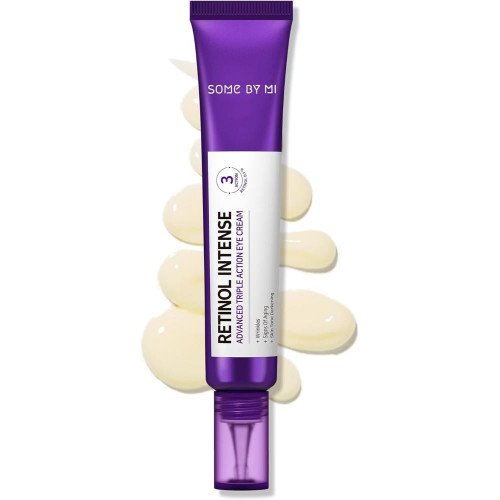
2. Retinol Products at Beauty Ten
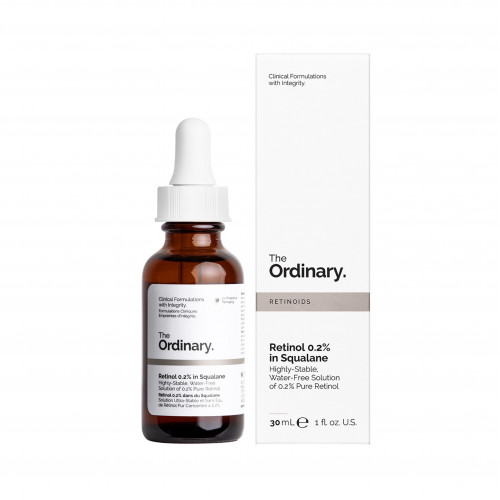
If your goal is to improve the appearance of skin texture, fine lines, and uneven skin tone, you can explore the retinol products available in the store and compare their ingredients, concentrations, and directions for use.
Do not choose a product based on its concentration alone. The formulation and your skin’s tolerance are also important factors.
Important: Adapalene and retinol are not identical products, and one should not be considered a direct substitute for the other. Choose according to your goal, and do not use adapalene as though it were an ordinary cosmetic serum.
Seventh: Can You Use Retinol and Adapalene Together?
Using retinol and adapalene together in the same routine is generally not recommended because combining them may increase dryness, redness, peeling, and irritation without providing a clear additional benefit for most users.
If you use adapalene to treat acne, follow the product instructions and avoid adding a retinol serum or strong exfoliating products on your own.
A doctor may sometimes recommend a treatment plan that combines different therapies with different mechanisms of action. However, this is different from randomly combining multiple retinoid products and should be done under appropriate professional guidance.
Eighth: Important Tips for Using Adapalene or Retinol
Start gradually: Follow the product instructions or your doctor's recommendations. Do not increase the frequency of use in an attempt to speed up results.
Moisturize regularly: Use a suitable moisturizer to help reduce dryness and support the skin barrier.
Use sunscreen:Choose a broad-spectrum sunscreen with SPF 30 or higher and follow sun-protection recommendations.
Avoid excessive exfoliation:Do not combine several active products at once if you are a beginner or your skin is irritated.
Do not use more than directed: Applying a larger amount does not mean faster results and may increase irritation.
Monitor your skin's response: If you experience severe burning, swelling, or persistent irritation, stop using the product and seek medical advice.
Take pregnancy and pregnancy planning into account: As a precaution, topical retinoids, including adapalene and retinol, are generally best avoided during pregnancy and when planning to become pregnant. Consult your doctor about suitable alternatives.
Acne treatments may take several weeks to produce noticeable improvement. Avoid judging a treatment after only a few days or constantly changing your routine. If your condition does not improve or gets worse, consult a dermatologist.
Frequently Asked Questions About Retinol and Adapalene
Is adapalene suitable for oily skin?
Adapalene may be suitable for oily, acne-prone skin, particularly when clogged pores, blackheads, or whiteheads are present. However, its suitability depends on your skin condition and how you use it. It may cause dryness even in people with oily skin.
Is adapalene better than retinol for acne?
Adapalene is a medicinal retinoid used to treat acne, while retinol is primarily used in cosmetic skincare. Therefore, adapalene may be the more appropriate option when treating acne is the main goal, but it is not necessarily better for every skincare need.
Can adapalene be used every day?
This depends on the product instructions and your skin's tolerance. Follow the directions on the product or your doctor's recommendations, and do not increase the frequency if irritation develops.
Can adapalene be used with vitamin C or exfoliating acids?
Combining several active ingredients may increase irritation in some people. It is best to avoid introducing multiple new ingredients at the same time and to review product instructions or ask a doctor or pharmacist about an appropriate routine.
Is adapalene available without a prescription?
Adapalene 0.1% is available over the counter in some markets, but dispensing requirements vary by country and product. Check local regulations before purchasing or using it.
Can adapalene or retinol be used during pregnancy?
As a precaution, topical retinoids, including adapalene and retinol, are generally best avoided during pregnancy and when planning to become pregnant. Consult your doctor about suitable skincare and acne-treatment alternatives.
Conclusion: Retinol or Adapalene?
If your main goal is to treat acne, blackheads, and whiteheads, adapalene may be an appropriate treatment option when used according to instructions suited to your condition.
If you want to improve the appearance of fine lines, skin texture, and uneven skin tone, a cosmetic retinol product may be worth exploring.
Do not choose based only on the ingredient's name or perceived strength. Identify your skin's needs, review the product formulation, introduce it cautiously, and prioritize moisturizing and sunscreen.
Explore adapalene and retinol options at Beauty Ten, and choose a product based on your skin's needs and the directions for use.
Trusted References
This article is for general educational purposes only and is not a substitute for consulting a dermatologist or pharmacist about acne treatments.




Leave a Comment