
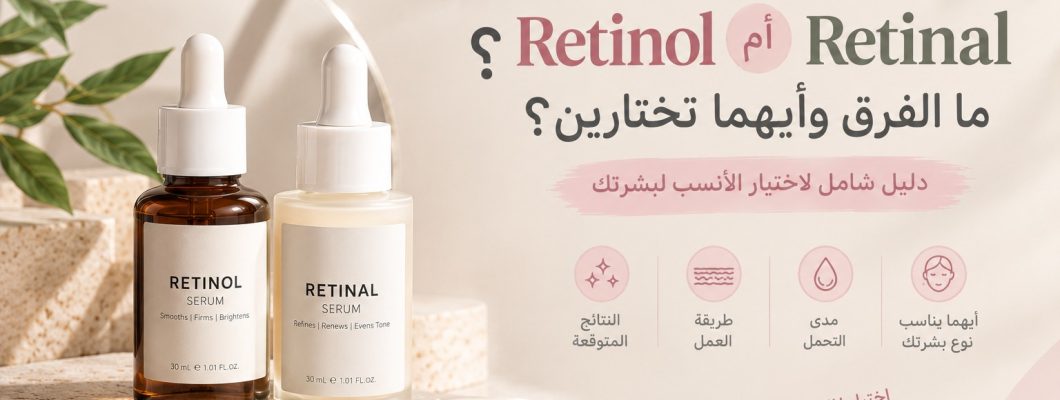
Retinol vs. Retinal: What’s the Difference, and Which Should You Choose for Your Skin?
If you are looking for a serum that helps improve skin texture, reduce the appearance of fine lines, and address hyperpigmentation and post-acne marks, you have probably come across two ingredients with similar names: Retinol and Retinal.
Both are vitamin A derivatives used in skincare, but they differ in how many conversion steps they require within the skin. Products containing these ingredients can also vary in concentration, formulation, and skin tolerability.
So, is retinal stronger than retinol? Is it worth switching to retinal? And which one is better if you are a beginner or have dry, sensitive skin?
In this guide from Beauty Ten, we will compare these two ingredients, explain how to choose between them, and explore examples of products available in the store to help you build a routine that suits your skin's needs.
What Are Retinol and Retinal?
First: What Is Retinol?
Retinol is a vitamin A derivative that belongs to a family of ingredients known as retinoids. It is found in many skincare products designed to improve the appearance of fine lines, skin texture, and uneven skin tone.
After retinol is applied to the skin, the body converts it through two chemical steps into retinoic acid, the active form that interacts with retinoid receptors in cells.
Retinol is widely used in cosmetic skincare products and is available in various formulations and concentrations. This makes it a potential option for people who want to gradually introduce a vitamin A derivative into their skincare routine.
Second: What Is Retinal?
Retinal, also known as retinaldehyde, is another vitamin A derivative. It requires only one chemical conversion step to become retinoic acid.
This makes it chemically closer to the active form than retinol and may make it an appealing option for people looking for an advanced cosmetic formulation to address the appearance of fine lines and skin texture.
However, there is an important point to remember: <>Being closer to the active form does not mean that every retinal serum is stronger or faster-acting than every retinol serum.<> The actual concentration, delivery system, overall formulation, application method, and your skin's tolerance all influence the results.
What Is the Difference Between Retinol and Retinal?
| Comparison | Retinol | Retinal |
|---|---|---|
| Origin | Vitamin A derivative | Vitamin A derivative |
| Conversion to retinoic acid | Two steps | One step |
| Main skincare uses | Improving skin texture, fine lines, and uneven tone | Similar goals, often featured in advanced cosmetic formulations |
| Suitable for beginners? | May be suitable in a low-strength formulation with gradual use | Can be used by beginners if carefully selected, but is not the easiest option for everyone |
| Potential irritation | May cause dryness, peeling, or redness | May also cause dryness and irritation |
| Choosing a concentration | Depends on the formulation and previous experience | Depends on the formulation and previous experience |
| Price and availability | Many options across different price ranges | Options may be more limited or more expensive, depending on the brand |
The bottom line: You cannot judge a product by its ingredient name alone. Compare the active ingredient concentration, overall formulation, application instructions, and your skin's needs.
How Do Retinol and Retinal Work on the Skin?
Both ingredients are used in skincare routines to improve the appearance of the skin over time. They may help:
Improve the appearance of fine lines and superficial wrinkles.
Smooth skin texture and improve the appearance of uneven skin.
Support a skincare routine targeting dark spots and flat post-acne marks.
Improve the overall appearance of dull or uneven-looking skin.
However, results vary from person to person, and no specific outcome can be guaranteed within a fixed period. Cosmetic retinol and retinal are also not automatically substitutes for prescription treatments designed to address acne.
If you have persistent or inflamed acne, or breakouts that leave scars, consult a dermatologist to determine the most appropriate treatment.
Is Retinal Stronger Than Retinol?
Chemically, retinal requires one fewer conversion step to become retinoic acid. For this reason, it is often considered a more advanced option among cosmetic retinoids.
However, this does not guarantee that retinal will produce faster or better results for everyone.
For example, a retinol formulation may contain a higher concentration or use a different delivery system, while a retinal product may use gradual-release encapsulation technology. Your skin may also tolerate one formulation comfortably while reacting to another because of differences in the ingredients or overall formula.
Therefore, if you are currently using retinol and getting good results without persistent irritation, there is no need to switch to retinal simply because it is chemically closer to the active form.
If you are interested in trying retinal after gaining experience with retinoids, you can compare suitable formulations carefully and choose one based on its instructions and your skin's tolerance.
Which Should You Choose Based on Your Skin Type and Experience?
1. If You Are New to Retinoids
Start with a relatively low-strength retinol formulation designed for beginners, or consider a retinal product with clear instructions if it suits your skincare needs.
Do not start by applying the product every night, and do not choose the highest available concentration simply because you expect better results.
You can compare the following options from Beauty Ten:
Dr. Althea Retinol Serum 0.1% – 30 ml
<>This is an option to consider if you are looking for a retinol serum with a stated concentration of 0.1%. The product page lists additional ingredients, including hyaluronic acid, plant oils, and vitamin E. However, the concentration alone cannot guarantee that irritation will not occur.
2. If You Already Use Retinol and Want to Try Retinal
If your skin has become accustomed to retinoids and you are looking for a retinal product, Beauty Ten offers options you can explore.
Celimax The Vita Retinal Shot – 15 ml
The product page lists 0.1% encapsulated retinal, along with ingredients such as niacinamide, panthenol, and peptides. It is worth considering when comparing retinal formulations, provided you follow the product instructions and introduce it gradually.
Arencia Retinal Pore Purification and Skin Rejuvenation Serum – 30 ml
Another option with retinal in its name. Visit the product page to verify the formulation details and application instructions before purchasing.
3. If You Want a Retinal Formula for Your Nighttime Routine
SEOUL 1988 Serum: Retinal Liposome 2% + Black Ginseng – 30 ml
The product page describes a formulation containing liposome-encapsulated retinal and black ginseng extract. It recommends nighttime use, gradual introduction, and following with a moisturizer.
Important note when comparing percentages:<> The 2% stated in the name of the liposome formula does not necessarily mean the product contains 2% pure retinal. Do not directly compare this figure with a product listing 0.1% actual retinal concentration unless you have verified how the percentage is calculated and reviewed the manufacturer's information.
4. If You Have Dry or Sensitive Skin
Do not choose retinal simply because it may sound more advanced. Your priority should be a formulation your skin can tolerate, combined with a simple routine that supports the skin barrier.
Start with a low frequency of application, use a suitable moisturizer, and avoid combining several exfoliating ingredients in the same routine while gradually introducing the product.
If you have persistent redness, active eczema, or noticeable irritation, consult a dermatologist before trying either ingredient.
Can You Use Retinol and Retinal Together?
It is generally not recommended to use retinol and retinal together in the same routine. Both are vitamin A derivatives, and combining them may increase the risk of dryness, peeling, and redness without providing a clear additional benefit.
Choose just one product and give your skin enough time to adjust before considering a change.
If you use other active ingredients, such as exfoliating acids, organize your routine carefully to reduce the risk of irritation. Avoid introducing multiple strong ingredients at the same time, especially if you are a beginner.
How to Use Retinol or Retinal Correctly
Follow these general steps, always prioritizing the product's specific instructions:
Start gradually: Use the product in the evening once or twice a week initially, provided the instructions allow this frequency.
Use an appropriate amount: Applying more product does not mean getting better results.
Apply to clean, dry skin: Unless the product instructions specify a different method.
Use a moisturizer: Moisturizing can help reduce dryness and support the skin barrier.
Apply sunscreen in the morning: Choose a broad-spectrum sunscreen with SPF 30 or higher.
Monitor your skin's response: If noticeable or persistent irritation develops, temporarily stop using the product and focus on a gentle routine. Consult a healthcare professional if your skin does not improve.
Retinoids should be avoided during pregnancy, including cosmetic retinol and retinal products. Consult your healthcare professional if you are planning a pregnancy or breastfeeding.
Common Mistakes When Choosing Between Retinol and Retinal
Assuming retinal is suitable for everyone: Skin tolerance varies from person to person.
Relying only on the percentage on the label: The stated percentage may refer to a blend or encapsulation system rather than the concentration of the pure active ingredient.
Changing products too quickly: Your skin needs time to assess tolerance and response.
Neglecting moisturizer and sunscreen: Both are essential parts of a balanced routine.
Combining multiple retinoids: Using more than one product does not necessarily produce better results and may increase irritation.
Expecting hyperpigmentation and scars to disappear completely: Some flat dark spots may improve, but indented or raised scars may require different treatments.
Frequently Asked Questions About Retinol and Retinal
Is Retinal Better Than Retinol for Wrinkles?
Not necessarily. Retinal is chemically closer to retinoic acid, but results also depend on the formulation, concentration, consistency of use, and skin tolerance. There is no rule guaranteeing that every retinal product is better than every retinol product.
Does Retinal Cause Skin Peeling?
Yes. Retinal can cause dryness, peeling, or redness, just like retinol. Start gradually, use a moisturizer, and reduce usage or temporarily discontinue the product if noticeable irritation develops.
Can Beginners Use Retinal?
Some beginners can use retinal if they choose an appropriate formulation and follow its instructions, but it is not the best option for everyone. If you have never used vitamin A derivatives before, choose a product designed for beginners and do not rely on the percentage alone.
Are Retinol and Retinal Suitable for Oily Skin?
Either ingredient may suit some people with oily skin, but skin type alone does not determine which one to choose. Consider your skin's sensitivity, the product's other ingredients, its tolerability, and your skincare goals.
Can They Be Used for Post-Acne Hyperpigmentation?
Both ingredients may be part of a routine designed to improve the appearance of certain flat dark spots. However, post-acne redness and indented or raised scars are different from hyperpigmentation and may require different approaches. Sunscreen is also essential when treating dark spots.
How Long Does It Take to See Results?
There is no single timeline that applies to everyone. Improvements depend on the concern being addressed, the formulation, consistency of use, and skin tolerance. Avoid increasing the frequency or concentration in an attempt to speed up results.
Conclusion: Which One Should You Choose?
If you are a beginner, retinol in a formulation designed for beginners may be a practical starting point. If you already have experience with retinoids and want to explore retinal, you can compare options such as Celimax, Arencia, or SEOUL 1988 available at Beauty Ten after reviewing their product details and instructions.
Do not choose a product based on its ingredient name alone. Choose a formulation that suits your skin's needs and that you can use consistently without noticeable irritation.
Explore retinol and retinal options at Beauty Ten, and compare product details before choosing the right one for your skincare routine.
Leave a Comment