
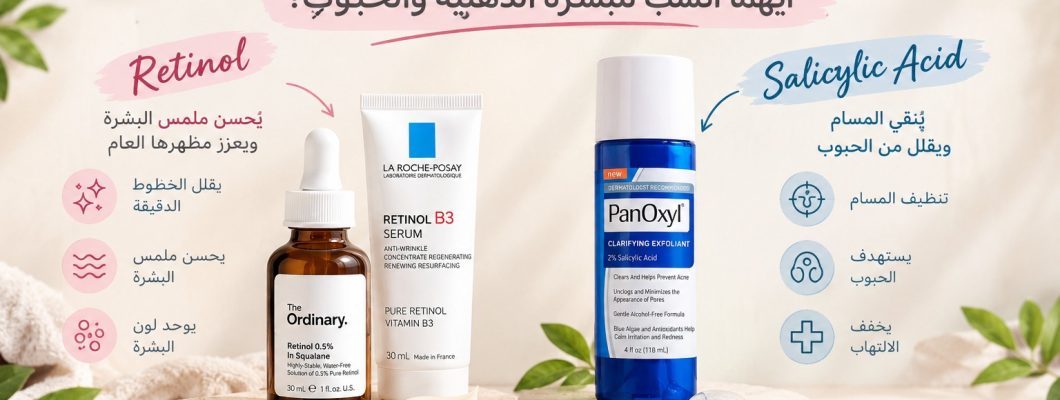
Retinol vs. Salicylic Acid: Which Is Better for Oily, Acne-Prone Skin?
If you have oily skin and notice breakouts, blackheads, and excess shine, you may have considered using retinol or salicylic acid. Both are popular skincare ingredients, but they work differently and serve different purposes.
So, is salicylic acid better for oily skin? Can retinol help reduce acne and its marks? And can you use both ingredients in the same skincare routine?
In this guide, we’ll compare <>retinol and salicylic acid<> in terms of their uses, benefits, and potential side effects to help you choose the ingredient that best suits your skin’s needs without overusing active ingredients.
What Is Salicylic Acid?
Salicylic acid is a beta-hydroxy acid (BHA) used in many skincare products, including cleansers, serums, and chemical exfoliants.
One of its key properties is its ability to exfoliate the skin and help address the buildup of dead skin cells inside pores. This makes it a popular option for oily skin that is prone to clogged pores.
What Are the Benefits of Salicylic Acid for Oily Skin?
Salicylic acid may help:
Reduce the buildup of dead skin cells inside pores.
Improve the appearance of blackheads and whiteheads.
Help reduce clogged pores associated with acne.
Improve uneven skin texture.
Support a skincare routine for oily, acne-prone skin.
However, it is important to understand that salicylic acid is not guaranteed to treat every type of acne. It may not be sufficient on its own when acne is inflamed, deep, or persistent.
Using it at high concentrations or too frequently may also cause dryness, redness, and irritation, even in people with oily skin.
What Is Retinol?
Retinol is a vitamin A derivative found in various cosmetic skincare products, including serums and creams designed to improve the appearance and texture of the skin.
After application, retinol undergoes several conversion steps in the skin to form active compounds involved in retinoid activity. It helps regulate skin cell turnover and may improve the appearance of fine lines, uneven skin tone, and certain acne marks.
There are also prescription topical retinoids specifically designed to treat acne, such as tretinoin and adapalene. However, these should not be confused with cosmetic retinol, as each has different properties and uses.
What Are the Benefits of Retinol for Oily, Acne-Prone Skin?
Cosmetic retinol may help:
Improve uneven skin texture.
Reduce the appearance of fine lines with appropriate use.
Improve the appearance of certain dark spots and acne marks.
Support a skincare routine for skin with uneven tone.
Although retinol may be beneficial for some cases of mild acne, it is not equivalent to prescription retinoids specifically formulated to treat acne.
Retinol is also not designed to absorb excess oil or eliminate shine immediately. Therefore, choosing it depends on your primary skincare goal.
What Is the Difference Between Retinol and Salicylic Acid?
The main difference lies in how each ingredient works and what it is intended to address.
| Comparison | Salicylic Acid | Retinol |
|---|---|---|
| Ingredient type | Exfoliating beta-hydroxy acid (BHA) | Vitamin A derivative |
| Common use | Exfoliating the skin and helping reduce clogged pores | Improving skin texture, fine lines, and uneven skin tone |
| Blackheads and whiteheads | A popular option for helping reduce clogged pores | Certain retinoids may help treat them, depending on the product |
| <>Dark acne marks | <>Not primarily used for evening skin tone | <>May help improve the appearance of some dark marks |
| Oil and shine | May help improve the appearance of oily skin | Not specifically designed to absorb excess oil |
| Main precautions | Dryness and irritation if overused | Dryness, redness, and peeling, especially when first introduced |
The American Academy of Dermatology supports the use of salicylic acid as one option for acne treatment and recommends topical medicinal retinoids for appropriate cases of acne. However, this does not mean cosmetic retinol and salicylic acid are interchangeable acne treatments or that one is better for every case.
Which Is Better for Oily Skin and Acne?
The answer depends on the concern you want to address first.
1. If Your Main Concern Is Blackheads and Clogged Pores
Salicylic acid may be a suitable starting point, especially if you want an exfoliating ingredient that helps remove dead skin cell buildup and improve the appearance of pores.
You can choose a cleanser containing salicylic acid or a leave-on product, depending on your skin’s needs and tolerance. Start with moderate use according to the product instructions, then monitor how your skin responds.
2. If You Have Acne and Dark Acne Marks
If your goal is to improve the appearance of dark spots left after acne heals, cosmetic retinol may be worth considering, provided it is suitable for your skin.
However, if your acne is recurring or inflamed, it is best not to rely on cosmetic retinol alone. Instead, consider whether you need a dedicated acne treatment, such as adapalene or another option appropriate for your condition and medical guidance.
3. If You Have Oily but Sensitive Skin
Oily skin is not necessarily able to tolerate frequent exfoliation. Sensitive oily skin may still have a weakened skin barrier, dryness, and a tendency toward redness.
In this case, start with a simple routine that includes a gentle cleanser, a suitable moisturizer, and sunscreen. Then introduce one active ingredient cautiously if your skin tolerates it.
If you experience persistent burning, noticeable peeling, or worsening redness, reduce use or stop the product and seek appropriate advice.
Can You Use Retinol and Salicylic Acid Together?
Some people can incorporate products containing both ingredients into the same skincare routine. However, combining them from the beginning may increase the risk of irritation, dryness, and peeli, particularly if you have sensitive skin or are already using other acne treatments.
If you are a beginner, it is best to start with one ingredient and monitor your skin’s response before considering the addition of the other.
If a healthcare professional recommends using both, applying them at different times or on separate days may help reduce irritation, depending on the products and their instructions. There is no single routine that works for everyone.
Remember that excessive exfoliation does not lead to faster results. Instead, it may irritate the skin and make redness and pigmentation more noticeable.
How to Choose the Right Exfoliant for Oily Skin
If your main goal is to reduce blackheads and clogged pores, an exfoliant containing salicylic acid may be a suitable option. However, choosing the right product involves more than simply looking at the ingredient name.
Consider the following factors:
Product type: Is it a rinse-off cleanser or a serum or exfoliant that stays on the skin?
Concentration and frequency of use: Follow the product instructions and do not increase the amount or frequency to speed up results.
Skin condition: Oily skin can still be sensitive or prone to dryness.
The rest of your routine: Avoid introducing several new exfoliants and active ingredients at once.
Moisturizing and sun protection: Use a suitable moisturizer and a broad-spectrum sunscreen with SPF 30 or higher.
To learn more about exfoliation and how to choose a suitable product, read this Beauty Ten guide:
Best Exfoliator for Oily Skin: How to Choose the Right One for Your Skin
Frequently Asked Questions About Retinol and Salicylic Acid
Is salicylic acid better than retinol for oily skin?
Not necessarily. Salicylic acid is useful for exfoliation and helping reduce clogged pores, while cosmetic retinol is commonly used to improve skin texture, fine lines, and uneven skin tone. The best choice depends on your goal and skin condition.
Does salicylic acid treat acne?
Salicylic acid can help reduce clogged pores and improve certain acne symptoms, but it is not sufficient for every case. Moderate, severe, or persistent acne may require a dedicated medical treatment.
Does retinol remove acne marks?
Cosmetic retinol may gradually improve the appearance of certain dark spots and skin texture. However, it does not eliminate every type of acne scar, and results vary depending on the type of marks and the product formulation.
Can salicylic acid be used every day?
This depends on the product's concentration, type, and your skin's tolerance. Follow the label instructions and do not continue using it at the same frequency if dryness or irritation develops.
Which ingredient is better for beginners?
If your goal is to reduce blackheads and clogged pores, a gentle product containing salicylic acid may be a suitable starting point. If you want to improve skin texture or the appearance of fine lines, cosmetic retinol may be worth considering. In either case, start with one active ingredient and choose a formulation that suits your skin.
Can retinol be used during pregnancy?
The American Academy of Dermatology recommends avoiding retinoids, including retinol, during pregnancy. Consult your doctor about suitable alternatives. The suitability of salicylic acid depends on its concentration, the area of application, and the duration of use. It is best to consult your healthcare provider before using it during pregnancy.
Conclusion: Retinol or Salicylic Acid?
If your main concerns are blackheads, clogged pores, and texture issues associated with dead skin cell buildup, salicylic acid may be a suitable option for your oily-skin routine.
If you want to improve the appearance of fine lines, uneven skin tone, and certain acne marks, cosmetic retinol may be worth considering, depending on your skin’s needs and tolerance.
If your goal is to treat persistent or inflamed acne, remember that medicinal retinoids and other treatments are specifically designed for this purpose. The appropriate option depends on the severity of your condition.
Choose the ingredient according to your skin’s needs, introduce it gradually, and remember that moisturizing and sunscreen are essential parts of your routine.
This article is for general educational purposes only and is not a substitute for consulting a dermatologist, particularly if you have severe or painful acne or acne that leaves scars.



Leave a Comment