Retinol vs. Tretinoin: What’s the Difference, and Which Is Right for Your Skin?
If you are looking for an ingredient that helps improve the appearance of your skin, or you struggle with recurring acne or post-acne marks, you have probably come across two names: Retinol and Tretinoin. Although both belong to the vitamin A-derived retinoid family, they are not the same product and are not used in the same way.
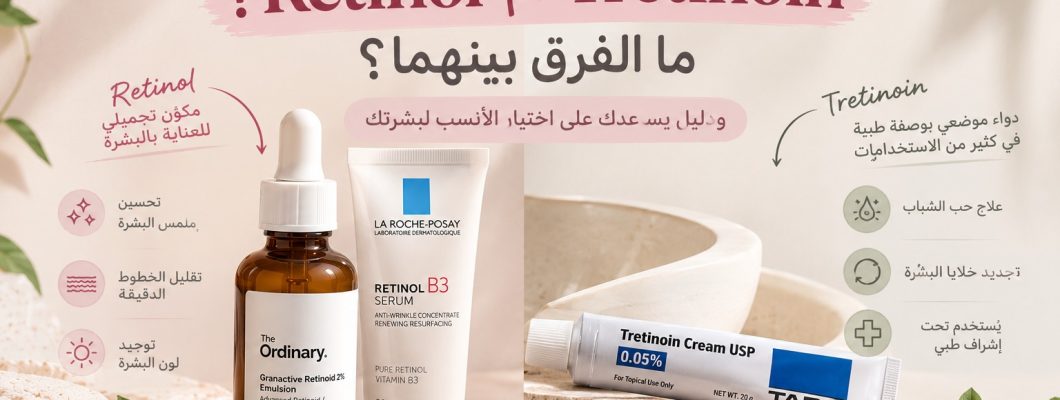
Retinol is commonly found in cosmetic skincare products designed to improve the appearance of skin texture, fine lines, and uneven skin tone. Tretinoin, on the other hand, is a topical medication used to treat specific skin conditions, including acne. It requires a prescription in many countries and for many approved uses.
So, what is the difference between them? Is tretinoin stronger than retinol? And can one replace the other?
In this guide from Beauty Ten, you will learn about their key differences, when each option may be appropriate, and how to choose skincare products that support your routine without confusing cosmetic products with prescription treatments.
First: What Is Retinol?
Retinol is a vitamin A derivative that belongs to a group of ingredients known as retinoids. It is found in many skincare products, including serums and creams, and is used to help improve the appearance of fine lines, skin texture, and uneven skin tone.
When retinol is applied to the skin, it undergoes two conversion steps before becoming retinoic acid, the form that interacts with retinoid receptors in cells.
Retinol products vary in concentration, formulation, and supporting ingredients. As a result, their effectiveness and how well the skin tolerates them can differ from one product to another.
What Are the Benefits of Retinol for Skin?
Retinol is used in skincare routines to help:
Improve the appearance of fine lines and visible signs of aging.
Improve skin texture and overall appearance.
Reduce the appearance of uneven skin tone and certain dark spots.
Support skincare routines for skin prone to clogged pores, depending on the product formulation.
It is important to distinguish between improving the appearance of the skin with a cosmetic product and treating a skin condition that requires prescription medication.
Second: What Is Tretinoin?
Tretinoin, also known as retinoic acid, is an active form of vitamin A used in topical medications to treat certain skin conditions, particularly acne.
Unlike retinol, tretinoin does not need to undergo the same conversion steps before interacting with retinoid receptors in the skin.
Tretinoin affects skin cell turnover and processes involved in the development of clogged pores. For this reason, a healthcare professional may prescribe it as part of an acne treatment plan. It is available in different medicinal strengths and formulations, with the appropriate option determined by the skin condition and a clinician's assessment.
What Is Tretinoin Used For?
Depending on the formulation, country, and regulatory approval, topical tretinoin may be used for conditions such as:
Treating acne, including blackheads, whiteheads, and certain types of pimples.
Improving certain signs of sun-damaged skin in specific dermatological applications under medical guidance.
Tretinoin should not be used simply because it is marketed as stronger than retinol. It is a medication with specific indications, instructions, and precautions.
Important: Tretinoin is not an ordinary cosmetic serum. It is a topical medication that requires a prescription in many countries and for many uses. Check local prescription requirements and use it under appropriate professional guidance.
Third: What Is the Difference Between Retinol and Tretinoin?
| Comparison | Retinol | Tretinoin |
|---|---|---|
| Classification | Common ingredient in cosmetic skincare products | Topical medication belonging to the retinoid family |
| How it works | Requires two conversion steps to become retinoic acid | Is retinoic acid and does not require these conversion steps |
| Common uses | Improving the appearance of texture, fine lines, and uneven skin tone | Treating acne and certain other skin conditions |
| How to obtain it | Commonly available in cosmetic products without a prescription | Requires a prescription in many countries and for many uses |
| Potential irritation | May cause dryness, redness, and peeling | May cause dryness, redness, peeling, and potentially noticeable irritation |
| How to choose | Based on the formulation, concentration, and skin needs | Based on medical assessment and the prescriber's instructions |
Is Tretinoin Stronger Than Retinol?
Chemically, tretinoin is the active form into which retinol is converted in the skin. This means it can act more directly on retinoid receptors.
However, it is not appropriate to compare every product based on its name alone. The medication's concentration, formulation, application method, and your skin's condition all influence its effects and tolerability.
Most importantly, stronger does not necessarily mean better for you. If your goal is to improve the appearance of your skin as part of a cosmetic skincare routine, retinol may be an option worth considering. If you have persistent or inflamed acne, you may need a medical assessment to determine the most suitable treatment.
Fourth: Which Should You Choose for Your Skin's Needs?
1. If Your Goal Is to Improve Fine Lines and Skin Texture
You may consider a cosmetic retinol product that suits your previous experience with the ingredient. Follow the application instructions, moisturize regularly, and use sunscreen.
This does not mean retinol is suitable for everyone or will produce identical results for every user. Outcomes depend on the formulation, consistent use, and your skin's tolerance.
2. If You Have Acne
If your acne is recurring, inflamed, painful, or leaving scars, it is best to consult a dermatologist rather than relying on a cosmetic serum alone.
A dermatologist may prescribe tretinoin or another treatment depending on the type and severity of your acne and the condition of your skin. Do not start tretinoin on your own or use a higher strength in an attempt to achieve faster results.
3. If You Have Sensitive or Dry Skin
Both retinol and tretinoin can cause irritation. It is therefore important to consider the condition of your skin barrier before introducing either ingredient.
If you experience persistent redness, ongoing peeling, or active eczema, have your skin assessed first. If you are using prescription tretinoin, do not change your application routine without consulting your doctor or pharmacist.
4. If You Already Use Retinol
You do not need to switch to tretinoin simply because it may have a stronger effect in certain medical applications. If your goal is cosmetic and your skin is comfortable with your current routine, continuing with a suitable formulation may be more reasonable than changing treatments without a clear need.
However, if your acne is not improving or you are developing noticeable acne marks, a dermatologist can help determine whether prescription treatment may be appropriate.
Fifth: Retinol Products to Explore at Beauty Ten
If your goal is to try cosmetic retinol, here are some options you can explore on the Beauty Ten website.
1. Dr. Althea Retinol Serum 0.1%
You can explore this product if you are looking for a retinol serum with a stated concentration of 0.1%. Review the ingredient list, application instructions, and suitability for your skin before choosing it.
Shop Dr. Althea Retinol 0.1% at Beauty Ten
2. Celimax Retinol Shot 0.1% Serum
Another option to compare if you are looking for a relatively low-concentration retinol product. Check the product details, ingredients, and application instructions on the store page before purchasing.
You can also read Beauty Ten's guide to retinol for beginners to learn how to build a gradual routine that suits your skin's needs.
Read the Retinol for Beginners Guide at Beauty Ten
Important note about these products: The retinol serums mentioned above are cosmetic skincare products, not medically equivalent alternatives to tretinoin. They should not be considered guaranteed substitutes for prescribed treatment when acne requires medical assessment.
Sixth: Important Tips for Using Retinol or Tretinoin
Whether you use cosmetic retinol or prescription tretinoin, the following steps can help reduce the risk of irritation:
Start according to the product instructions or your doctor's guidance: Do not increase the amount or frequency of use to speed up results.
Prioritize moisturization: Use a suitable moisturizer to support the skin barrier and reduce dryness.
Wear sunscreen: Choose a broad-spectrum sunscreen with SPF 30 or higher and follow sun protection recommendations.
Avoid overloading your routine with active ingredients: Do not add multiple exfoliants or retinoid products to the same routine without appropriate guidance.
Avoid applying products to severely irritated skin: Tell your healthcare professional if you have eczema, sunburn, or persistent irritation.
Consider pregnancy and pregnancy planning: Topical retinoids, including retinol and tretinoin, are generally advised against during pregnancy. If you are planning a pregnancy or breastfeeding, consult your healthcare professional about suitable products.
If you experience severe irritation, swelling, or persistent burning, stop using the product and seek medical advice. If tretinoin was prescribed to you, contact your doctor or pharmacist for guidance on managing irritation.
Frequently Asked Questions About Retinol and Tretinoin
Can You Use Retinol and Tretinoin Together?
Combining them in the same routine is generally not recommended because it may increase dryness, redness, and peeling without providing a clear additional benefit. If you use prescription tretinoin, consult your doctor before adding another retinoid product.
Is Retinol an Alternative to Tretinoin?
Retinol is not a medically equivalent substitute for tretinoin. Retinol is a cosmetic ingredient used to address concerns related to skin appearance, whereas tretinoin is a topical medication with specific indications. If your doctor prescribed tretinoin to treat a skin condition, do not replace it with a retinol serum without consulting them.
Is Tretinoin Suitable for Beginners?
It should not be selected solely according to whether someone is a beginner or experienced with cosmetic skincare. Tretinoin is a medication that requires appropriate medical assessment and instructions, and it may cause noticeable irritation. Do not start using it without consulting a qualified healthcare professional.
Can Tretinoin Help With Post-Acne Marks?
Tretinoin may help improve certain aspects of the skin as part of an appropriate treatment plan, but post-acne marks are not all the same. Flat dark spots, redness, and indented or raised scars need to be distinguished because they may require different treatments.
Can You Use Retinol or Tretinoin During Pregnancy?
Topical retinoids, including retinol and tretinoin, are generally advised against during pregnancy. If you are pregnant or planning a pregnancy, consult your healthcare professional to review your skincare routine and medications.
Conclusion: Retinol or Tretinoin?
The right choice depends on your skincare goals, not simply on which ingredient is stronger.
If you are looking for a cosmetic ingredient to improve the appearance of fine lines, skin texture, and uneven skin tone, retinol may be a suitable option as part of a well-planned skincare routine.
If you have persistent acne or need medical treatment, a dermatologist may recommend tretinoin or another option based on your individual condition.
Remember that tretinoin is a medication, not simply a stronger cosmetic serum. Choosing the right treatment starts with understanding your skin's needs and prioritizing its health.
Explore retinol products at Beauty Ten, and carefully read each product's instructions before adding it to your skincare routine.
Trusted References
This article is for general educational purposes and does not replace advice from a dermatologist or pharmacist regarding topical medications.
Leave a Comment